- Decide your cut-off time and your late arrival fee before anyone asks.
- Write the access steps for someone who cannot see the house.
- Always give a plan B that does not depend on you answering the phone.
In holiday regions, the last flight of the day is often the cheapest one. That is why so many guests land in the evening, clear customs around ten, pick up a rental car and reach your door somewhere near midnight. They are tired, it is dark, and whatever you sent them is three screens up in a message thread.
Late arrivals are not the exception in short-term rentals. They are a normal Tuesday. Here is what to settle before one goes wrong.
Decide your cut-off, and say it before the booking
Pick the time after which you no longer want someone arriving unannounced, and write it in your listing, your confirmation and your guest information. Anything between 10pm and midnight is common. The exact hour matters less than the fact that your guest knows it before they book the evening flight.
Two things follow from that time:
- What happens after it. Self check-in as usual, a fee, or arrival the next morning.
- Who is involved. If a person has to hand over a key, that person needs to know the rule too.
If you charge for a late arrival, publish the amounts
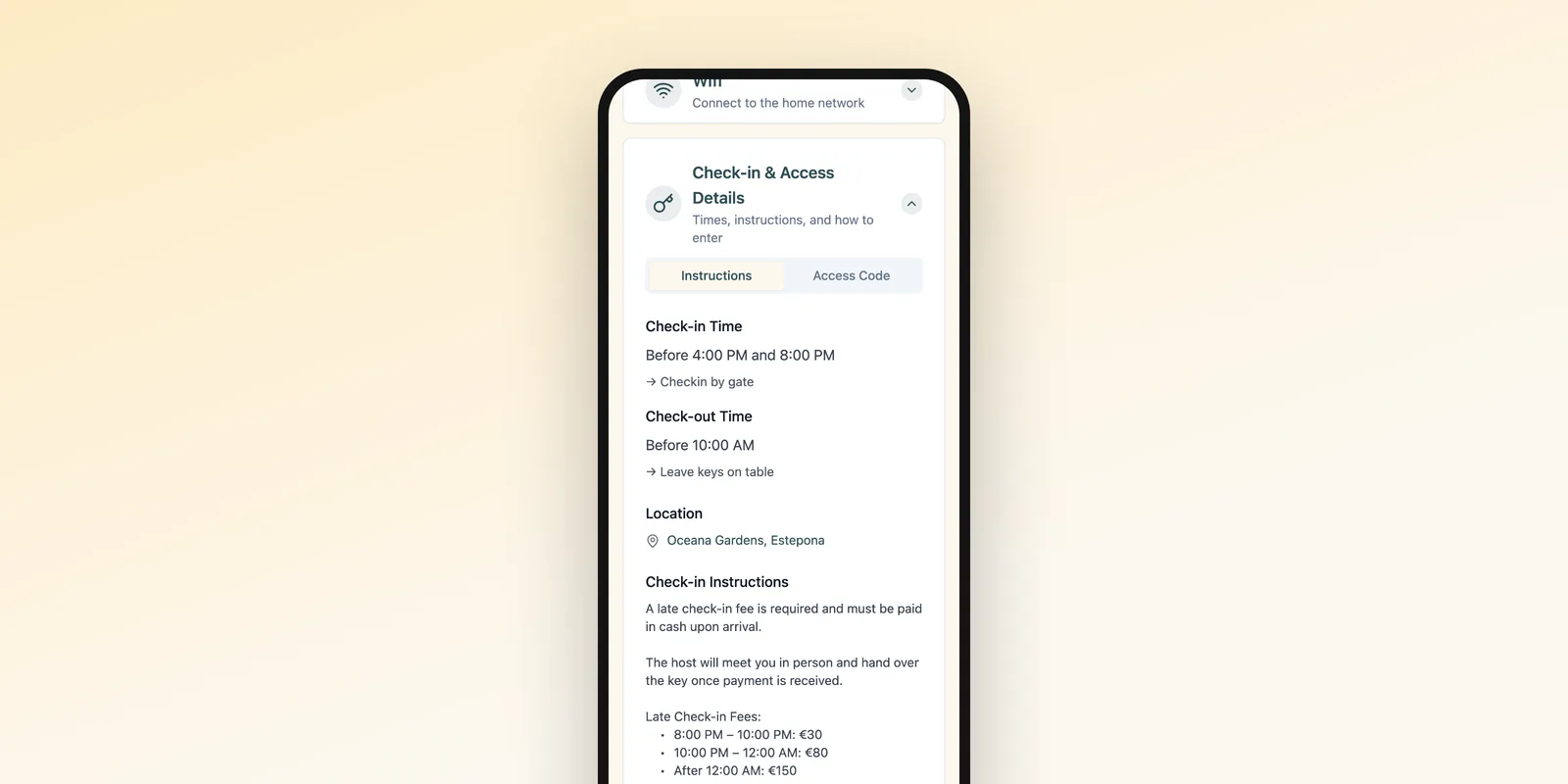
A fee that appears at the door feels like a fine. The same fee, written down before the trip, is simply a condition. Put the bands and the amounts in your guest information, in the same section as the check-in times, so a guest can read them while they are choosing their flight.
Be honest with yourself about what the fee is for. If a caretaker has to drive out at eleven at night, it covers a real cost. If your check-in is a keypad, it does not, and guests notice the difference.
Write the access steps for someone who cannot see the house
Everything you know about your door is invisible to a stranger in the dark. Write the steps the way they will experience them:
- Where to park, and whether the space has a number.
- Which gate, and what it looks like at night. “The green gate next to the olive tree” beats “the side entrance”.
- Where the lockbox or keypad is, at what height, and whether there is a light.
- The code, and what the lock does when it works. A click, a green light, a long press.
- What to do with the key once they are in.
Every step should fit on one line. A guest reading on a phone with one hand, holding a suitcase with the other, does not read paragraphs.
Give a plan B that does not depend on you
The code fails, the battery is flat, the gate is locked, the flight is delayed by four hours. The difference between an annoyance and a disaster is whether the guest has somewhere to go next.
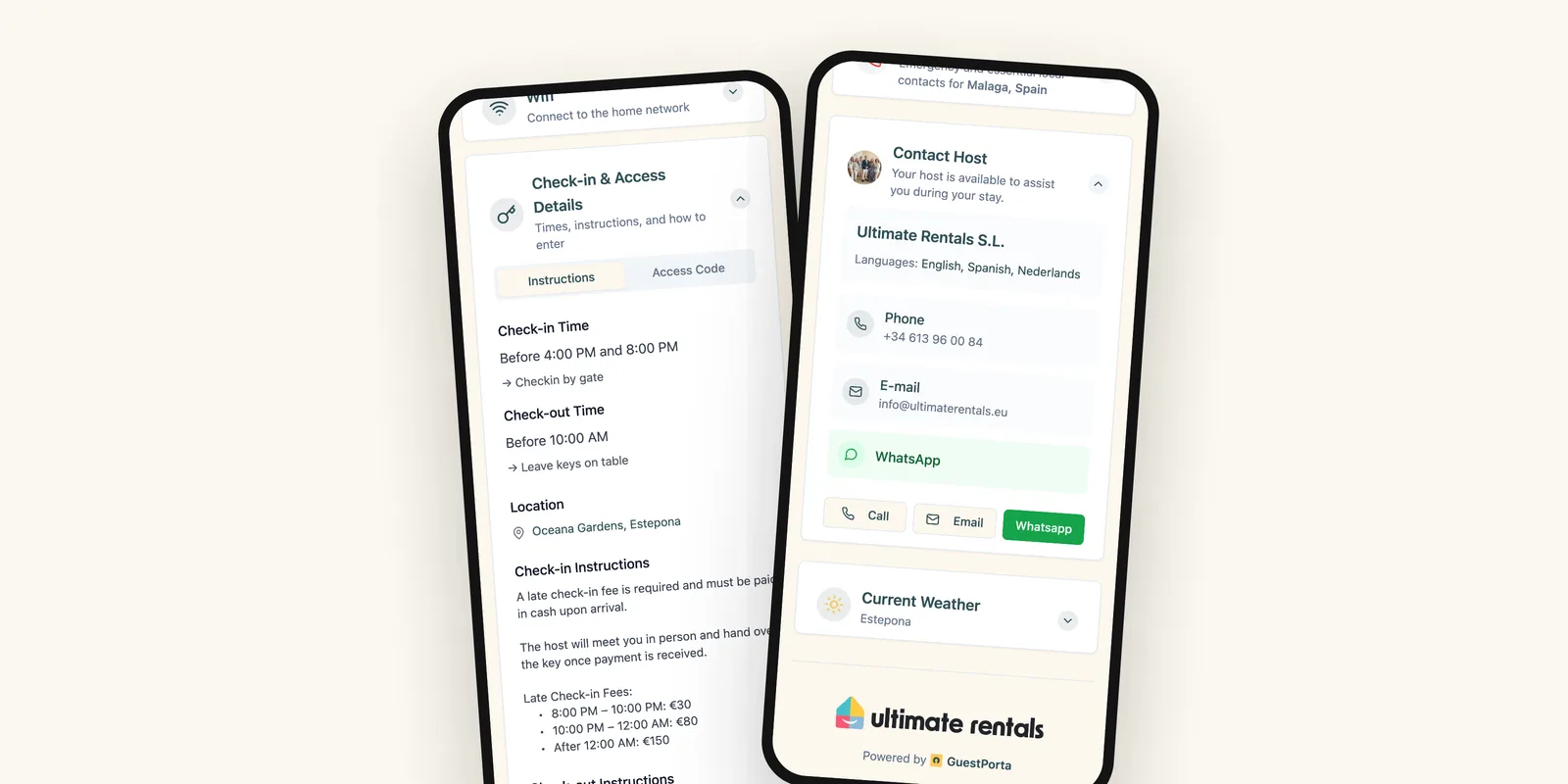
A plan B can be a spare key in a second lockbox, a neighbour who is awake late, or a number that reaches someone on the island or in the village rather than you in another country. Write it down in the same place as the code. People do not search for a backup plan at one in the morning; they call the only number they can see.
Say what the first night looks like
A guest who arrives at midnight has different needs from one who arrives at three in the afternoon. A few lines go a long way:
- Where the light switches are, in a house they have never walked through.
- Whether there is water, coffee or anything for breakfast, and what time the nearest shop opens.
- Where not to make noise after a certain hour, especially in an apartment building or a resort.
- Where to park tonight if the proper space is hard to find in the dark.
Keep the arrival information in one place you can change
The reason late arrivals go wrong is rarely the hour. It is that the instructions were sent once, weeks earlier, and something changed since: a code, a gate, the parking.
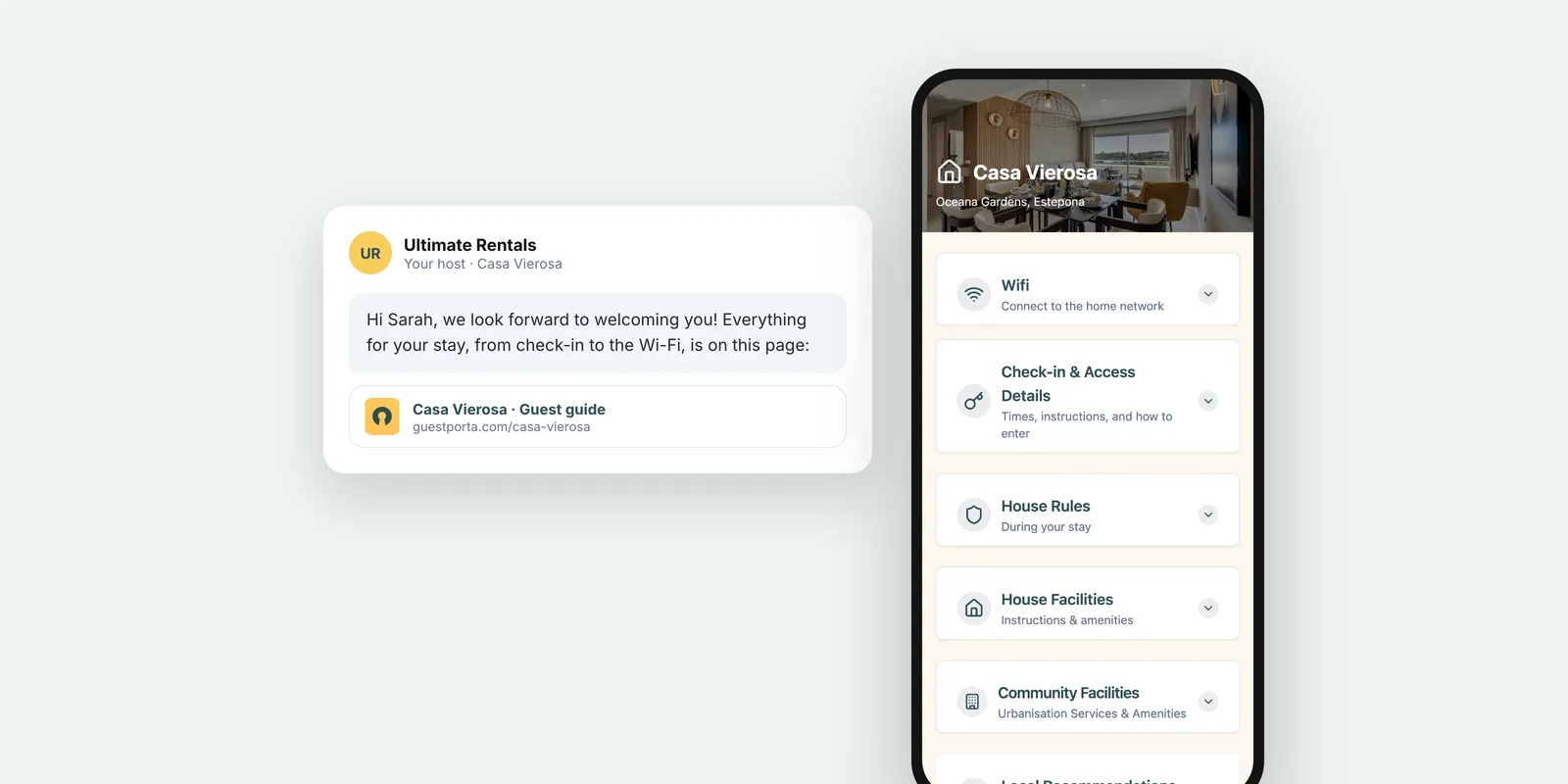
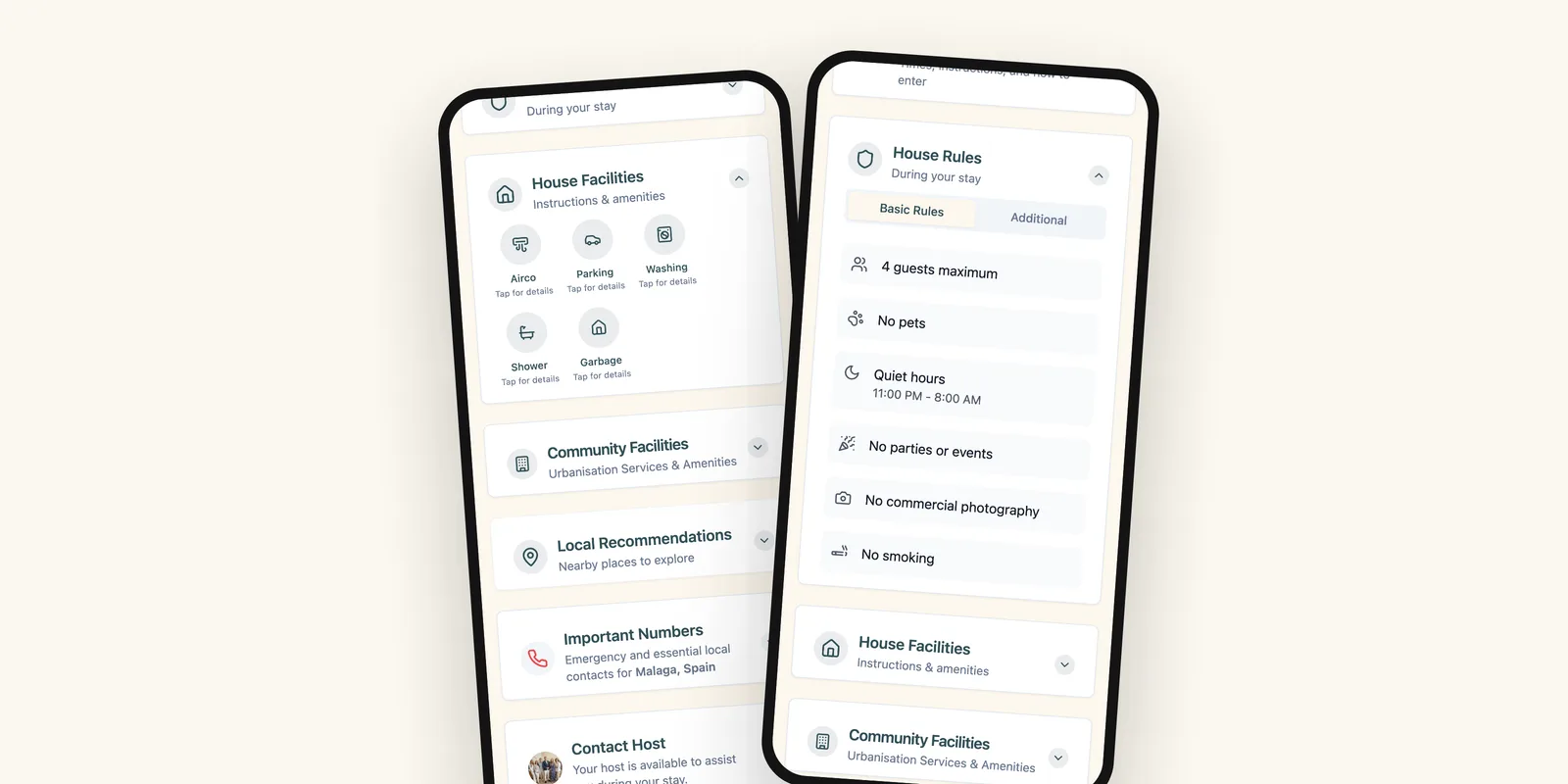
Keep the arrival steps where you can correct them at any moment, and share that one place instead of retyping it per booking. That is exactly what a guest page does, and what our check-in instructions are built around. Change the code once and every guest who has the link, including the one landing tonight, sees the new one. The same goes for the other end of the stay, which we cover in check-out instructions guests follow. If you run a bed and breakfast and live on site, the same ideas apply with a few differences, which we cover in what to put in your B&B guest folder.
FAQ
Should I charge a late check-in fee?
Only if someone has to be there, or if it costs you a night of sleep. If your check-in is self service, a late arrival costs you nothing, and charging for it reads as a penalty for a delayed flight. If you do charge, publish the times and the amounts before the booking, never after the arrival.
How late is too late?
Most hosts set a cut-off somewhere between 10pm and midnight, after which arrival moves to the next morning or costs extra. The number matters less than saying it out loud: a guest who knows the rule plans around it.
What if the code does not work at one in the morning?
That is what a plan B is for: a second way in, a spare key with a neighbour, or a number that is answered at night. Write it on the same page as the code, not in a separate message.
The GuestPorta team builds digital guest pages for hosts and property managers, and writes about guest communication for short-term rentals.