Built for portfolios, not single listings
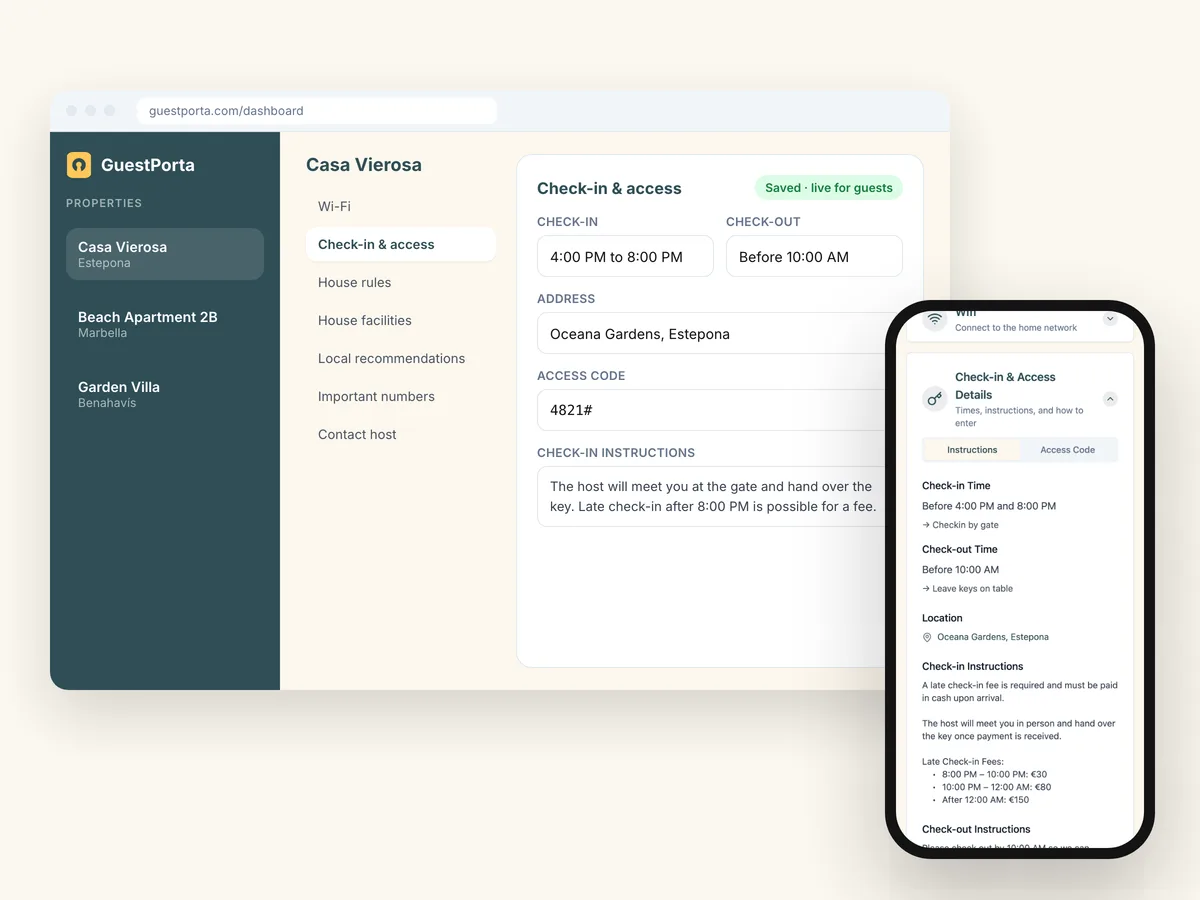
Managing short-stay properties means the same information exists many times over, each version slightly different: another door code, another router, another bin day. A guest page per property, all in one dashboard, keeps that information in one place instead of in a dozen message templates.
Because a page is a link, it works the same for every guest, whichever platform they booked through and whichever country they arrive from.
What changes for your team
Fewer repeat questions, and a single place to update when something changes. When a lockbox code changes, the person who changed it updates the page, and every upcoming guest sees the new code without anyone resending a message.
The cost of the same information in twelve places
A portfolio rarely fails on the big things. It leaks time on small ones:
- The same welcome text, copied per property, each copy edited at a different moment.
- A code that changed on Friday and lives in three message templates, two of them stale.
- A cleaner who is told about a new bin day, while the guests are not.
- A new colleague who answers guest questions by searching old threads.
Every one of those is cheap on its own. Together they are the reason your evenings fill with messages that someone already answered once.
One structure, filled in per property
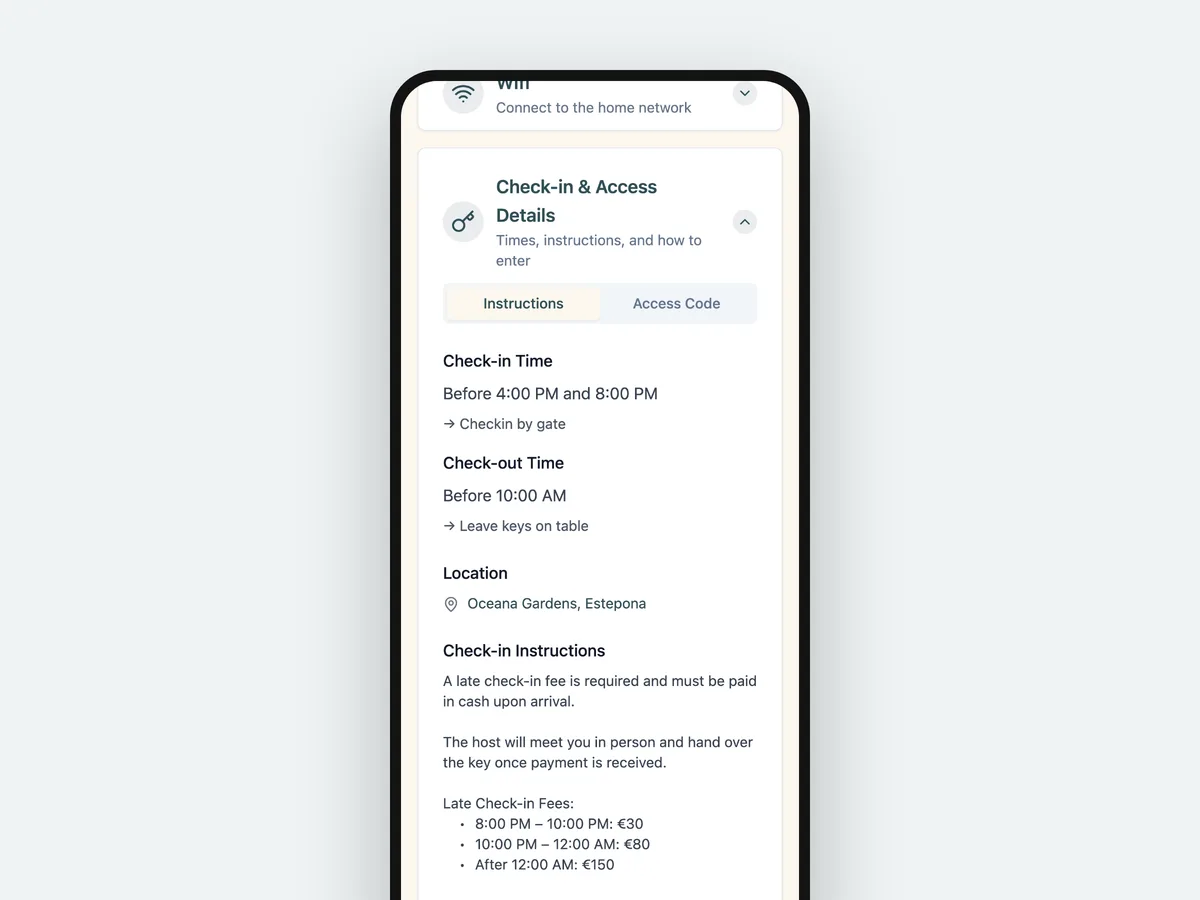
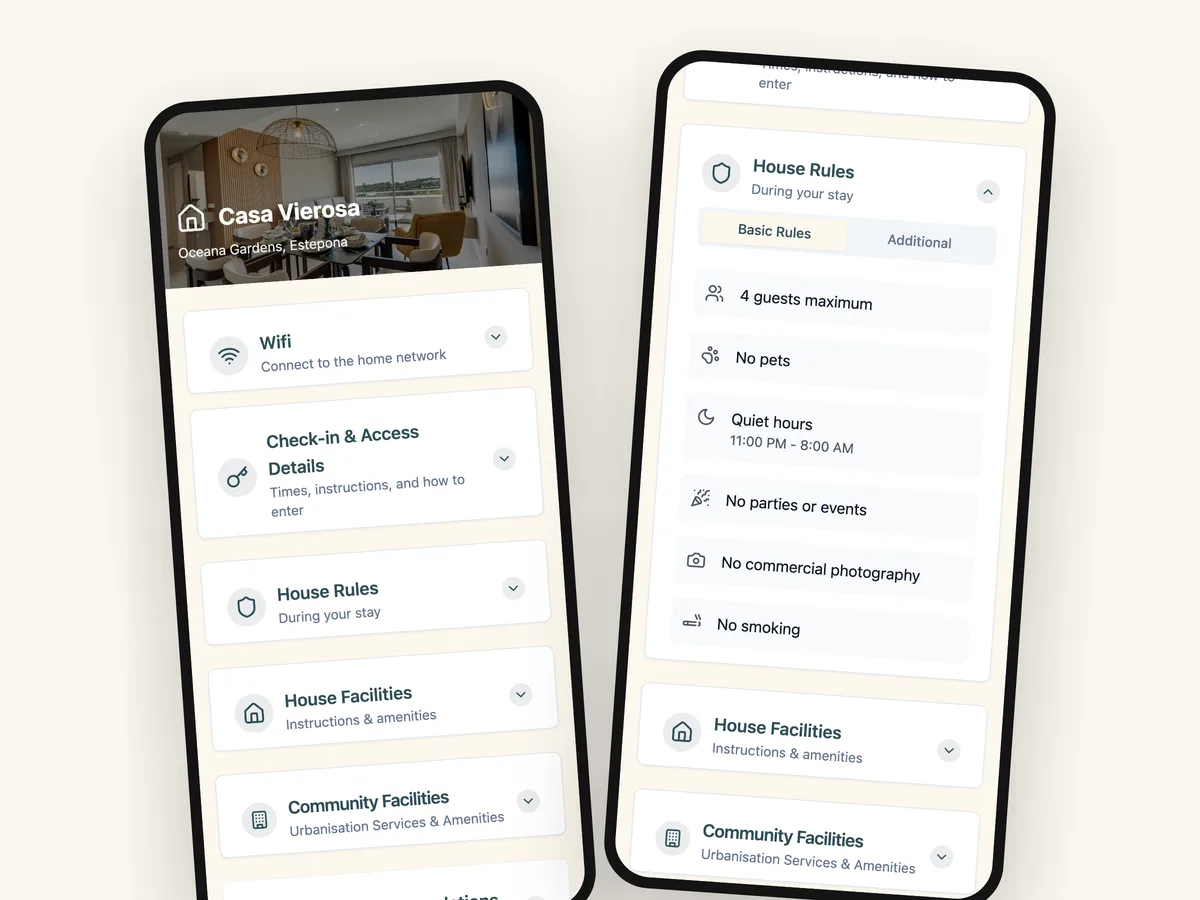
The work pays off the second time you use it. Write the structure once, and every property gets the same page: arrival and access, Wi-Fi, how the house works, the rules, the area, check-out. Only the details change, and the details are exactly what a colleague can fill in without rewriting anything.
That also makes handover simple. A new property manager reads one page per home and knows what guests know.
Who updates what
In practice the editing splits in two:
- Things that change per property, such as a gate code or a parking space, which the person on site changes the moment it happens.
- Things that change for everyone, such as a new cleaning partner or a different quiet hours policy, which someone central edits once per page.
Because the page is live, there is no second step. No resending, no versions, no wondering whether the guest arriving tonight has the current code.
Owners see the same page as guests
Owners who live abroad like to know what their guests are told. Send them the link. It is the same page, with no login, which is usually the end of the conversation about whether the information is up to date.
What it does not do
A guest page is not a property management system. It does not take bookings, send invoices, manage cleaning schedules or file the traveller registration that some countries require. It sits next to those tools and takes over one job: everything the guest needs to know during the stay, in one link per property.