Why arrival in Spain is its own thing
The cheap flights land late. By the time a guest has collected the rental car at Malaga, Alicante or Valencia and driven out, it is dark, and they are looking for an urbanisation that looks like the three before it. The instructions you sent are somewhere in a message thread, under a photo of the pool.
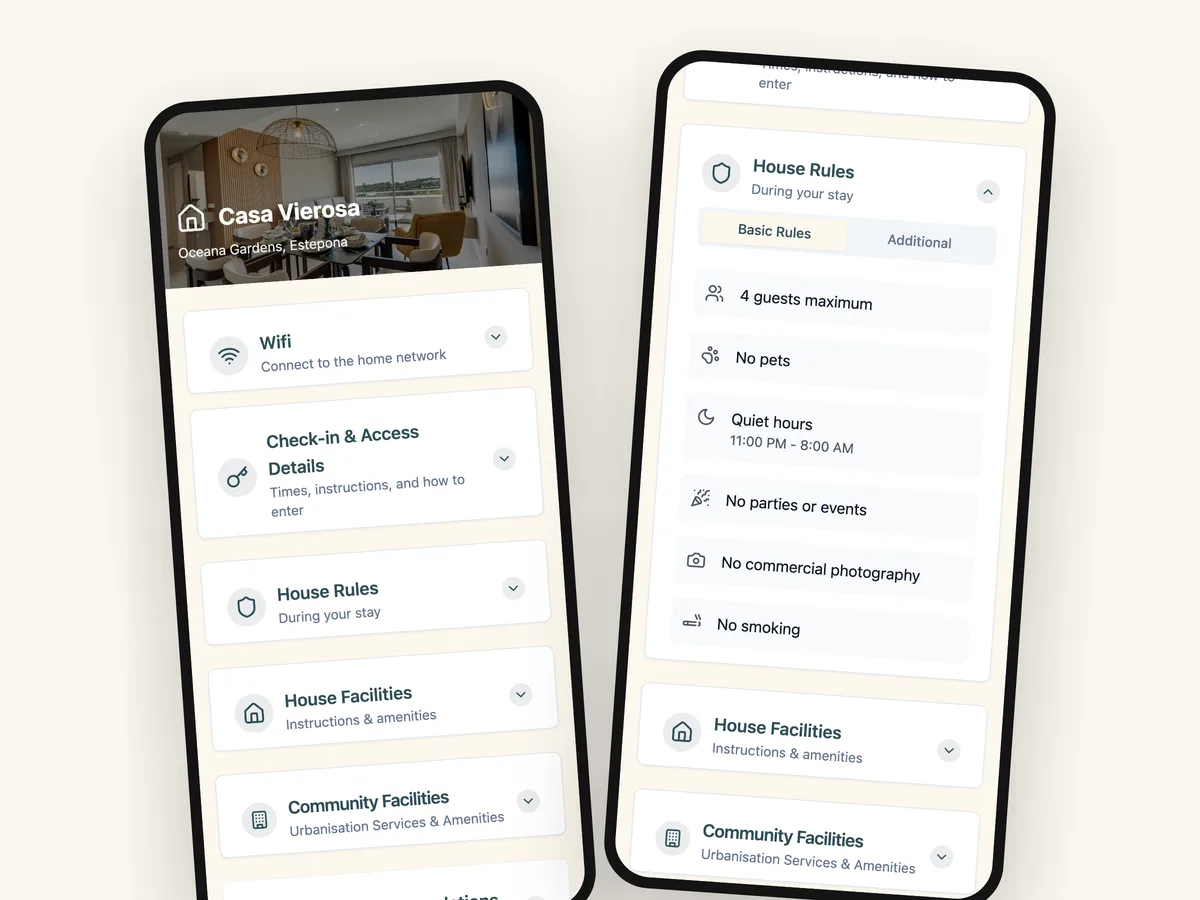
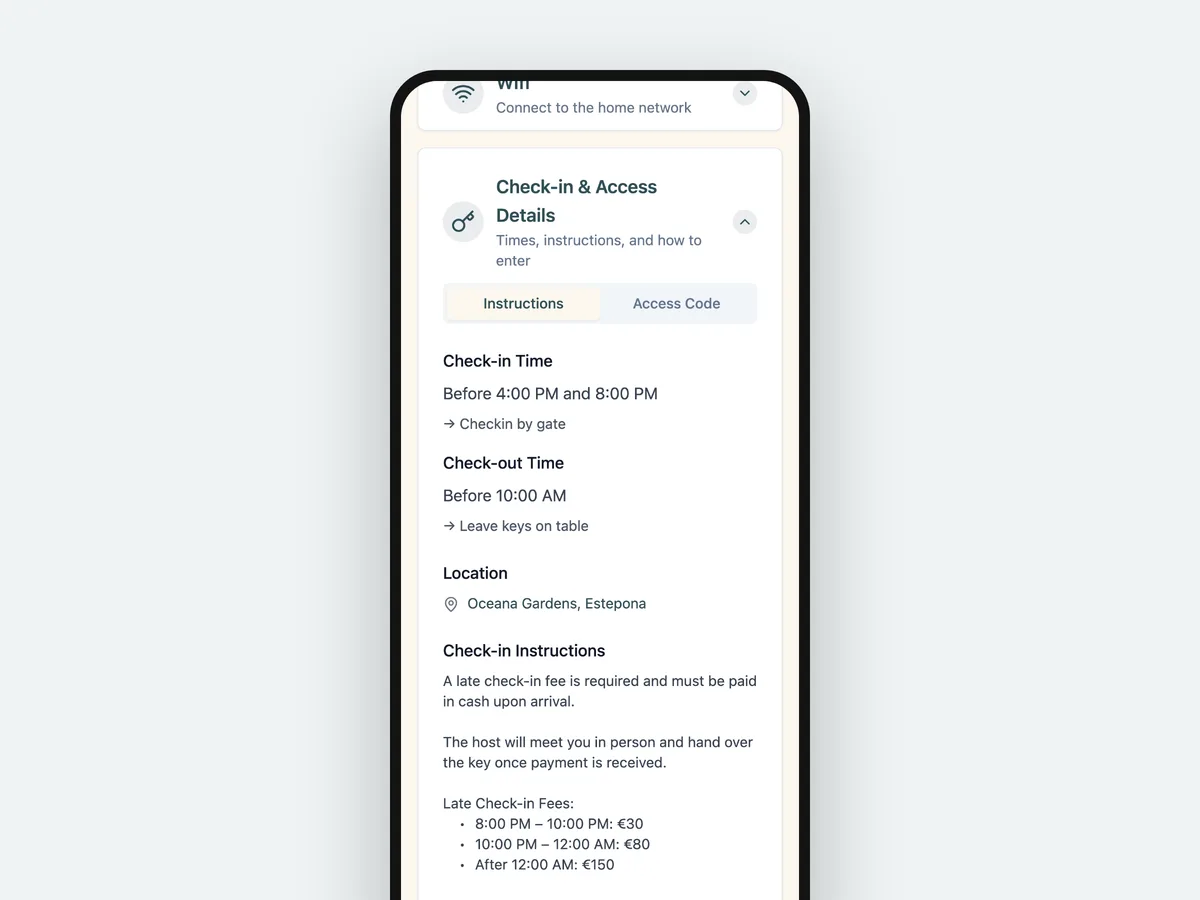
That is the moment one link earns its keep. Not a folder on the kitchen table, which they reach only after they are already inside, but a page they opened before they drove off.
The Spanish questions worth answering in advance
Every host here answers the same handful, so write them once:
- The gate. The barrier code, where the pedestrian gate is, and which parking space is yours. Say what the space number looks like, because in most urbanisations it is painted on the floor.
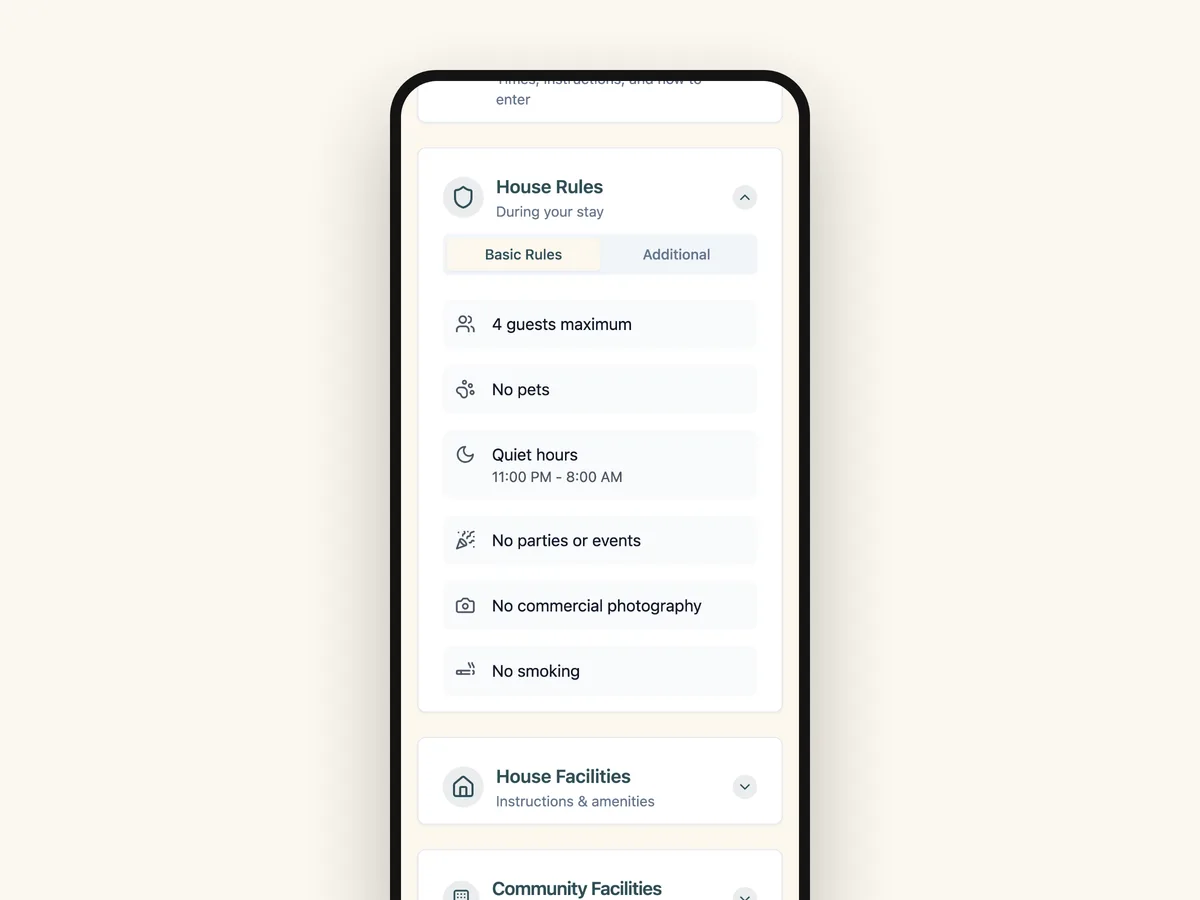
- The pool. The hours the community sets, whether glass is allowed, and whether a towel may stay on a sunbed. Our guide to pool rules has the wording.
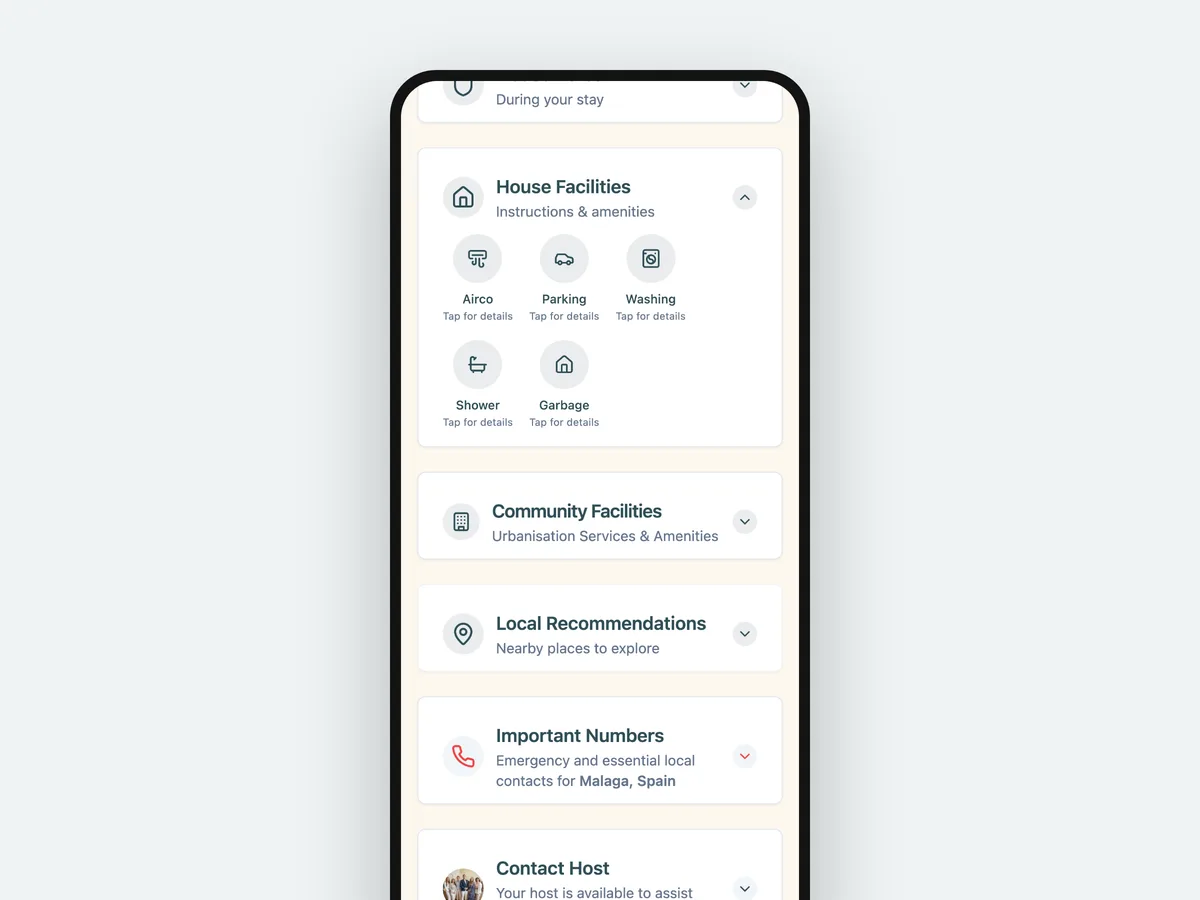
- The air conditioning. How to switch it on, which mode to use, and whether you ask guests to turn it off when they leave the apartment.
- The water. In most of Spain the tap water is safe to drink, and it tastes different from region to region. Guests ask every time, so answer it in one line for your town.
- The bins. Where the containers stand, how far it is, and which one takes glass, paper and organic waste.
- The siesta. Not every town has one, but where shops close in the afternoon it changes how a guest plans their first day.
None of this is in a guidebook in the form a guest needs it: what applies to your house, in the order they will need it.
The registration is yours, the information is the page
Spain asks you to register the people who stay with you and to keep records of the booking. That runs through the official system with the documents you collect, and no guest page does it for you. What the page can do is tell guests which document to have ready at check-in, so the five minutes at the door do not become fifteen.
Keep the two apart in your own head as well: the page is what the guest reads, the register is what you owe the authorities.
One page, several languages
Your guests are a mix. British families in the spring, Dutch and German couples in the autumn, Spanish families from Madrid in August. The page carries whatever you write, so you can keep an English version and add Spanish, and send the link that fits the booking.
Our own site is available in Spanish as well, at guestporta.com/es.
For owners and for managers
If you rent out one apartment on the coast, a page takes an evening to fill in and then runs itself. If you look after a handful of properties for owners who live abroad, the gain is in the repetition: the same structure for every home, with only the gate code, the community rules and the beach nearby swapped out. That is the case the property managers page covers in more detail, and the holiday homes page shows how a whole house differs from an apartment.