- Separate the rules that keep people safe from the ones that keep neighbours happy.
- A private pool needs fewer rules than a shared one, but clearer ones about children.
- Say what happens when a rule is broken, or the rule is a suggestion.
A pool is the reason many guests booked your place, and the reason most of your rules exist. It is also where a holiday turns into an incident: a child alone at the edge, a broken glass on the wet tiles, music at one in the morning next to a neighbour’s bedroom window.
Long pool rules do not prevent any of that, because nobody reads them. Short ones, in the right place, do.
Split your rules into two groups
Write them separately, because guests treat them differently:
- Safety. No lifeguard, children supervised by an adult, no diving in a shallow pool, no glass near the water. These are not negotiable, and the reason behind each one is obvious.
- Living together. Pool hours, music, towels on sunbeds, guests who are not staying with you. These are about neighbours and other apartments.
When you mix them, the safety rules drown in the housekeeping ones. When you separate them, each group is three or four lines, and both get read.
Private pool: fewer rules, clearer ones
With your own pool, most of the “living together” list disappears. What remains:
- Children are never in or near the pool without an adult, and there is no lifeguard.
- No glass on the terrace, with a line on where the plastic glasses are.
- No diving, if the pool is shallow, with the depth written out.
- Where the pool cover goes, if there is one, and what to do with it at night.
- Who to call if the water looks wrong, and when the pool is cleaned.
That last point prevents a whole category of messages. Guests who know the cleaner comes on Thursday do not report cloudy water on Wednesday evening.
Shared pool: repeat the community rules in your own words
In a resort or an apartment complex, the rules are not yours, but the complaints reach you. Write the community rules the way a guest would understand them:
- The hours the pool is open, which are usually earlier and shorter than guests expect.
- Whether towels on sunbeds are allowed when you are not there, which is the number one source of friction with residents.
- Whether food, drinks and music are allowed in the pool area.
- Whether visitors who are not staying in the complex may use it.
Say that these come from the community, not from you. Guests accept a rule from the building more easily than a rule that looks like an owner being strict.
Word them as expectations, not warnings
Compare these two:
- “It is strictly forbidden to leave children unattended at the pool at any time.”
- “There is no lifeguard. Children stay with an adult, always.”
The second is shorter, friendlier and clearer, and it is the one a parent remembers at the edge of the water. Write every rule as a sentence you would say out loud at the door.
A few more that work:
- “Quiet around the pool after 11pm, the neighbours sleep close by.”
- “Glasses break, so we keep the glass inside. The plastic ones are in the kitchen cupboard.”
- “Please take the towels in at night, they disappear in the wind.”
Say what happens when a rule is broken
A rule without a consequence is a suggestion. You do not need threats, just clarity: a cleaning fee for a pool that needs draining, the community fining the owner, or a conversation with the caretaker. One line is enough, and it belongs under the rule itself rather than in a block of conditions at the end.
Put them where the guest already is
Pool rules in the rental agreement protect you legally. Pool rules on the page the guest opens on arrival protect the pool. Most hosts need both, and only the second one changes behaviour.
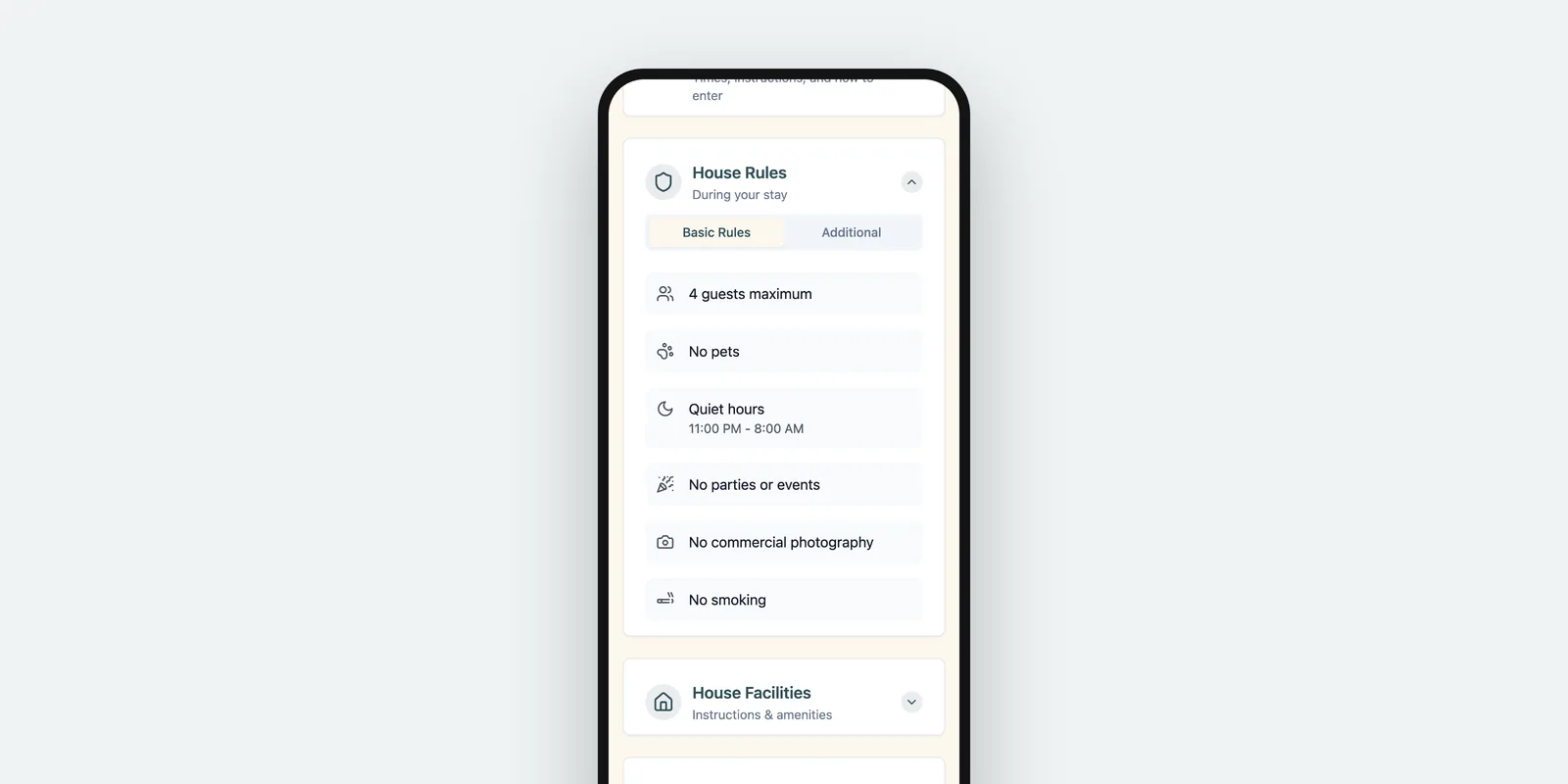
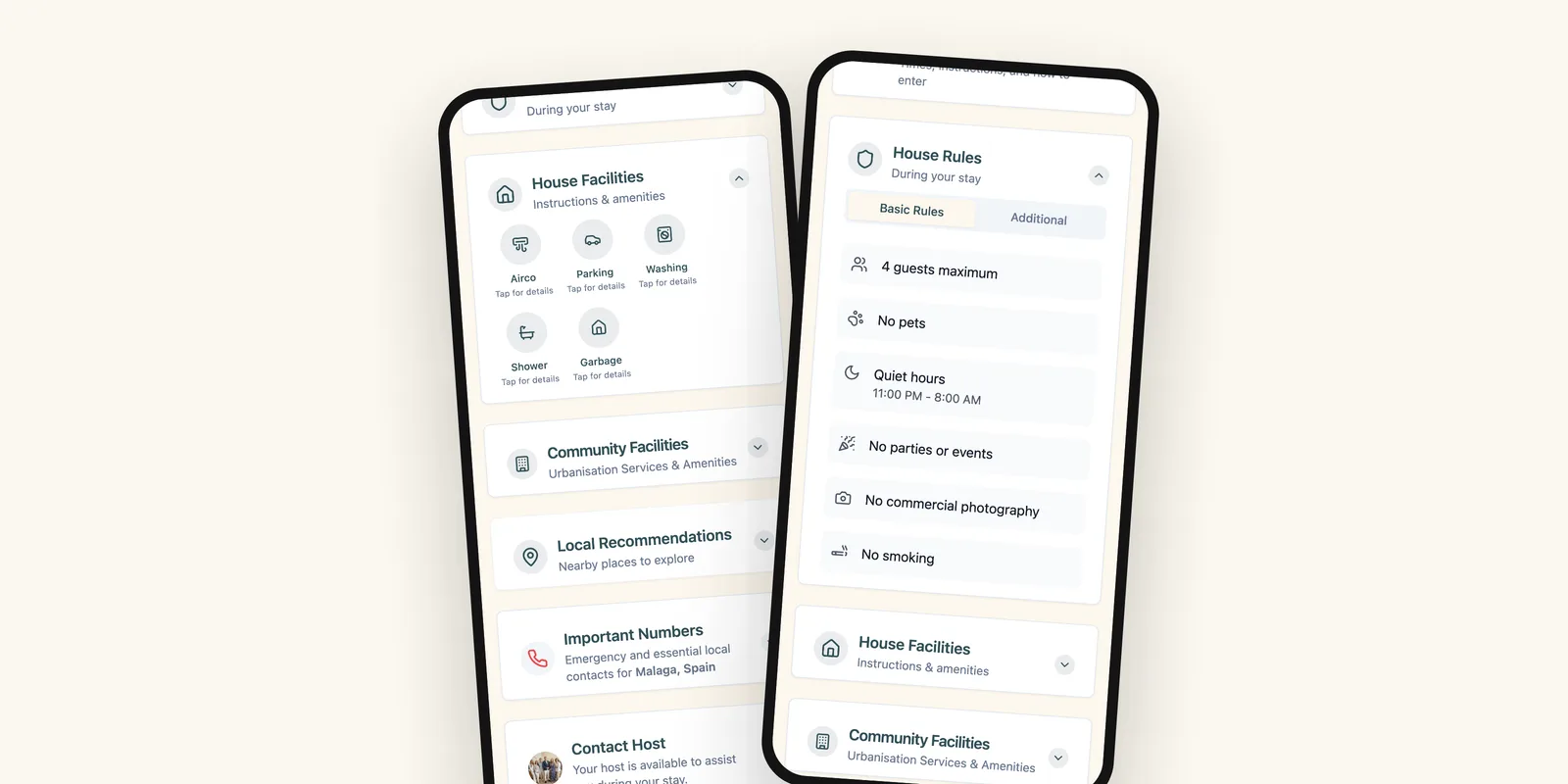
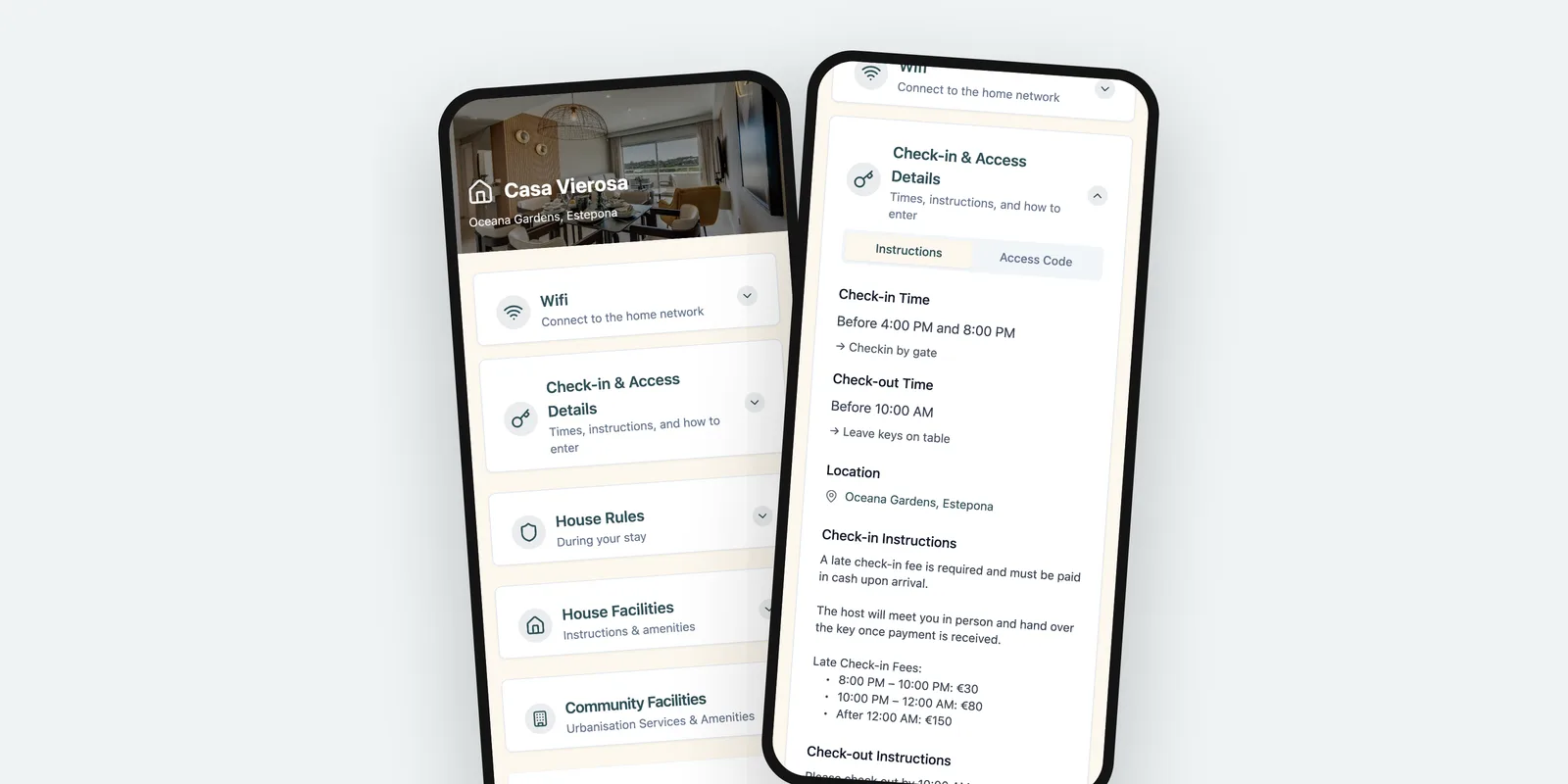
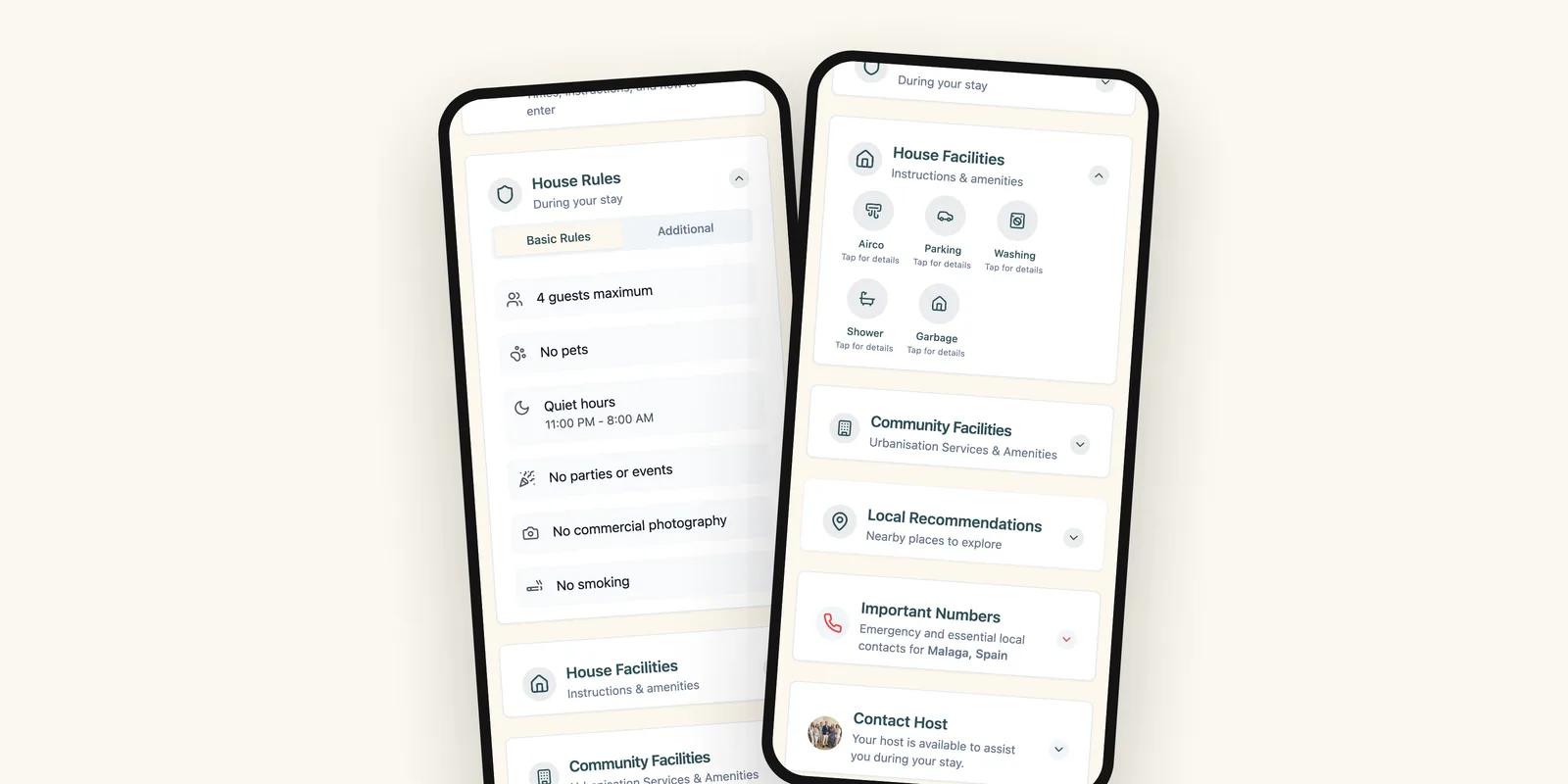
Keep them in the same place as the check-in steps and the Wi-Fi, so a guest reads them in the first five minutes, and so you can change a pool hour or a cleaning day without reprinting anything. That is how our house rules on the guest page work, and if you are writing rules for the first time, the guide on house rules guests respect has the wording for the rest of the house.
FAQ
Am I allowed to ban children from the pool?
You can require that children are supervised by an adult, which is what most hosts mean. Refusing children altogether is a different matter and in many places not allowed, so check the rules where your property is before you write anything like it.
Do I need to mention that there is no lifeguard?
Yes, say plainly that guests swim at their own risk and that children are the responsibility of the adults with them. Put it in your rental agreement as well as your guest information; the guest page is where people actually read it.
How do I handle a pool shared with other apartments?
Repeat the community rules in your own words, with the opening hours, and say what the community does about towels on sunbeds and noise. Guests break those rules because they never saw them, not because they disagree.
The GuestPorta team builds digital guest pages for hosts and property managers, and writes about guest communication for short-term rentals.