- Order the manual by the stay, not by topic.
- Every code, time and address gets its own line.
- Add what is unusual about your home, skip what is obvious.
A house manual is only as good as the question it answers at the moment a guest asks it. Use the checklist below to make sure nothing is missing, then order it by the stay: what guests need before they arrive at the top, what they need on the last morning at the bottom.
Before arrival
These are the questions guests ask while they are still travelling, often on a phone with a weak connection. Make them the easiest to find.
- Address, written the way a taxi driver or navigation app needs it, plus a map link
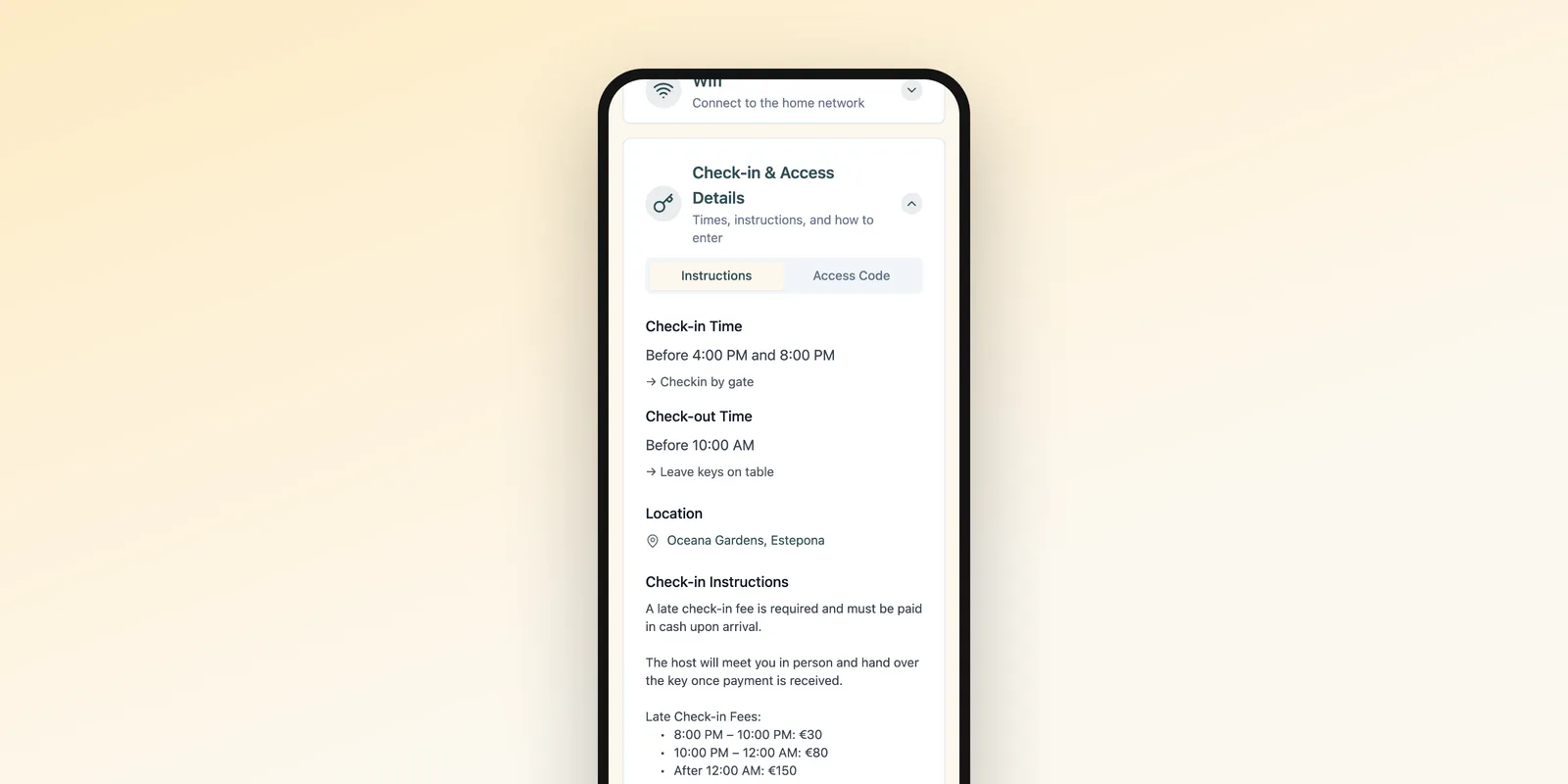
- Check-in window, and what happens if a flight is late
- Parking: where, whether it is free, and how to get into a garage or gated area
- How to get in, step by step, see self check-in instructions
- Your phone number and when guests can reach you
On arrival
The first hour decides how the rest of the stay feels. Guests want to get online, understand the home and put their luggage down.
- Wi-Fi: network name and password, easy to copy
- Heating, air conditioning and hot water, especially anything that needs time or a switch
- Lights and shutters, if they are not where guests expect them
- Where the essentials are: towels, spare bedding, first aid kit, fuse box
During the stay
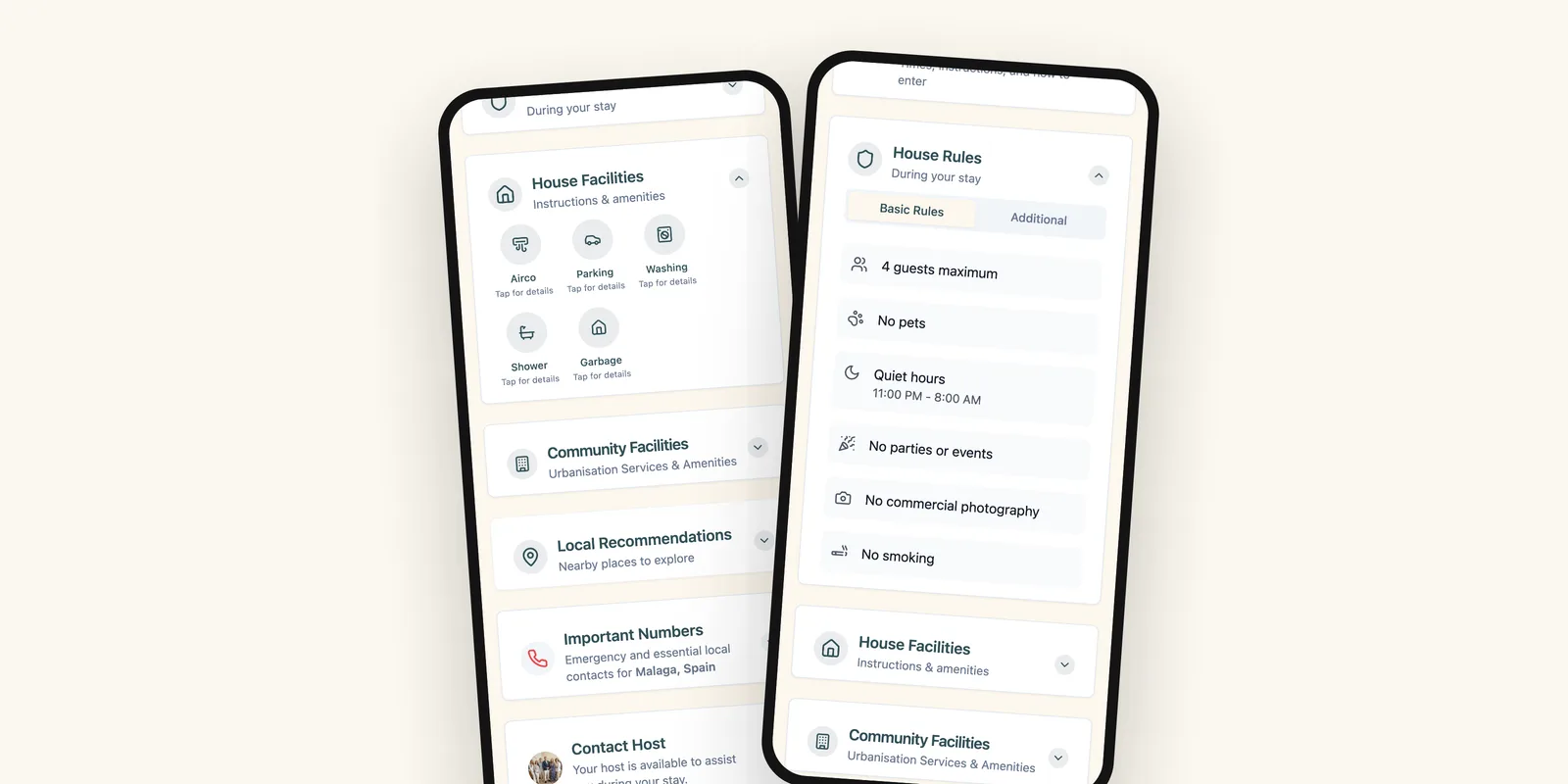
- House rules: quiet hours, pets, smoking, maximum number of guests, parties
- Appliances: oven, hob, dishwasher, washing machine, coffee machine, TV
- Rubbish and recycling: which bin, which day, where to take it
- Pool, gym or other shared facilities, with opening times
- Local tips: a handful of restaurants, beaches, shops and sights you would recommend to a friend
- Transport: taxi numbers, the nearest bus or train, where to rent a car
For emergencies
Guests rarely read this section, until the moment it matters. Keep it short and specific.
- Local emergency number, which is not the same in every country
- Nearest pharmacy, doctor and hospital
- What to do if something breaks, and whom to call for what
- Your contact details, and a backup contact if you are unreachable
For check-out
- Check-out time
- What to do with the keys
- What to do before leaving: dishes, bins, towels, windows, air conditioning
- A thank you, and a gentle reminder about a review
What to leave out
A long manual is not a thorough one. Leave out anything a guest would never ask about, such as how a standard kettle works or the history of the building. Every extra paragraph makes the important lines harder to find.
One place, always current
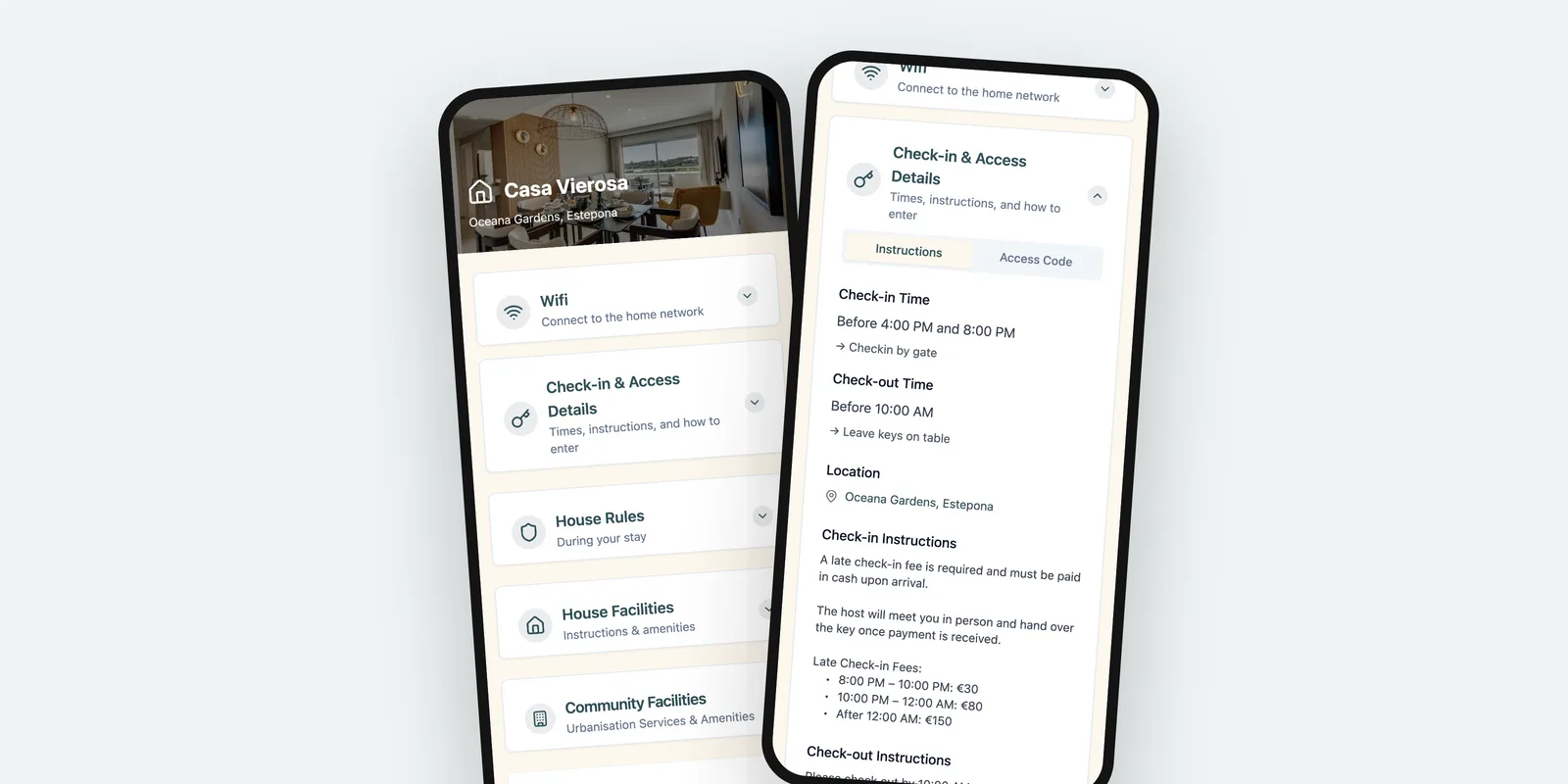
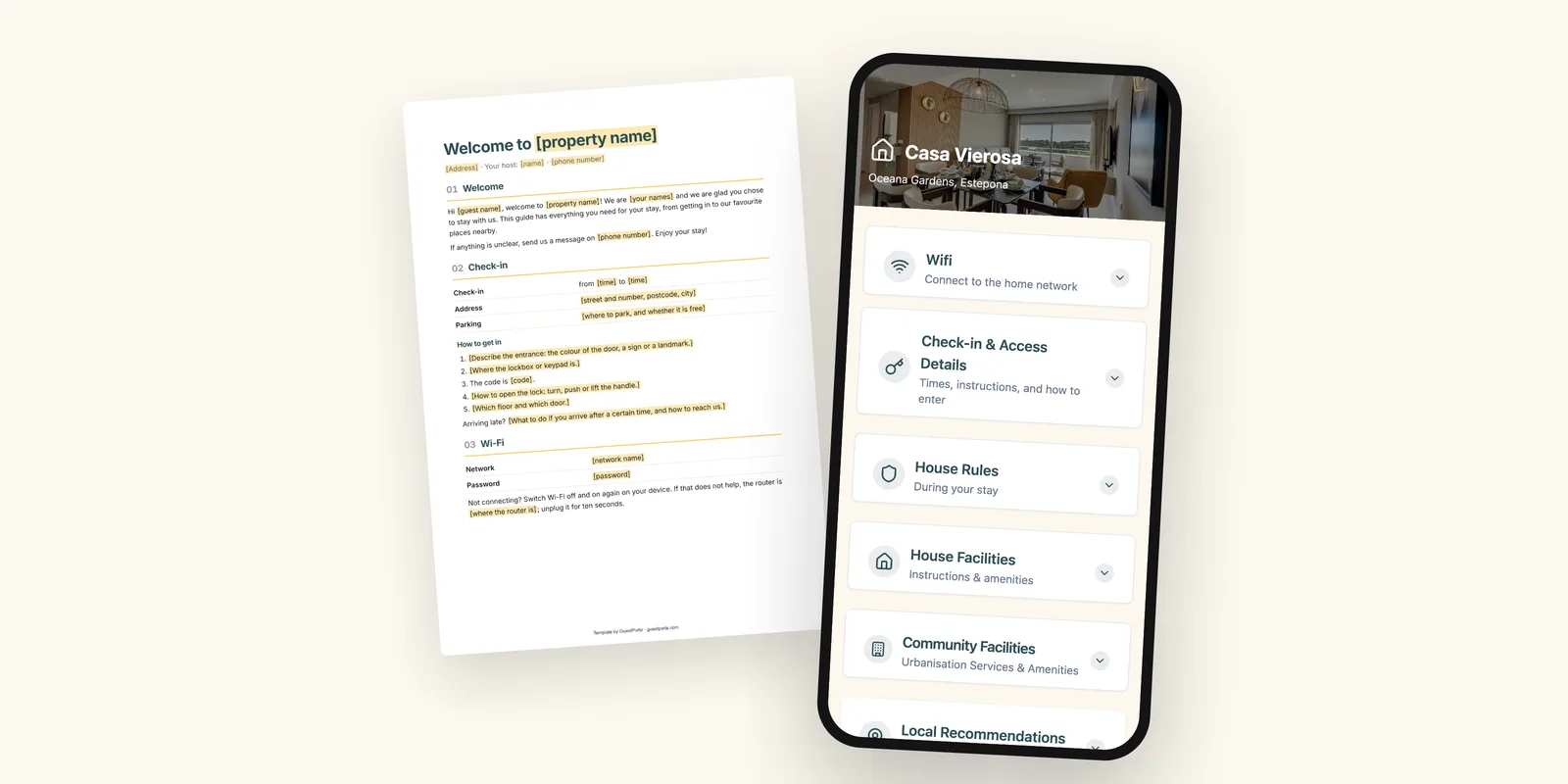
Once the checklist is complete, keep it in one place. A printed folder only helps once guests are inside, and a message thread scrolls away. A digital welcome book reaches guests before they travel and stays correct when something changes. If you want a head start, use the free welcome book template, which follows this same structure.
FAQ
What is the difference between a house manual and a welcome book?
Nothing, in practice. Both names describe the guide with everything a guest needs during the stay. Some hosts use house manual for the practical part and welcome book for the whole guide.
How detailed should the appliance instructions be?
Only as detailed as the appliance is unusual. A standard kettle needs nothing. A boiler that needs ten minutes, an induction hob or a washing machine with a foreign language panel does.
Should I include my house rules in the manual?
Yes. Keep the essentials in your listing so guests agree to them at booking, and repeat them in the manual so they are in front of guests during the stay.
The GuestPorta team builds digital guest pages for hosts and property managers, and writes about guest communication for short-term rentals.