- A B&B guest folder is not a holiday home manual, because you are in the house and the guests share it with you.
- Breakfast is the part guests ask about most, so give it times, a place, and a way to tell you about allergies.
- Keep the personal welcome in person, and use the written part for facts that guests need again later.
It is 7.40 on a Saturday morning. A guest stands at the foot of the stairs in socks and asks if breakfast has started. You are already at the stove, you have told the couple in room two twice, and the doorbell is ringing.
A bed and breakfast is a different job from a holiday home. You are in the house, the guests share your hallway, and your hospitality is part of what they paid for. So the guest folder should not look like a manual for an empty apartment. It should cover what is specific to a house with people in it.
Start with what is different from a holiday home
In a self-catering rental, the guide stands in for you. In a B&B, you are there, so the guide has a smaller and more precise job:
- Answer the questions that come up when you are not in the room.
- Give the facts a guest wants to check again later, such as the Wi-Fi password or the breakfast hour.
- Set the rhythm of the house, so nobody has to ask what is normal.
What it should not do is replace the welcome at the door. Paper or screen, a guest folder cannot offer a cup of tea. Keep the first five minutes personal and put the rest in writing.
Breakfast: the section guests open first
Breakfast is the reason for the name, and it is the part with the most small questions. Write:
- The times. Start and end, and whether they differ on Sundays.
- The place. The dining room, the kitchen table or the garden, and which door to use.
- How it works. Served at the table, buffet, or ordered the evening before.
- Dietary needs. How to tell you about allergies or a vegetarian guest, and by when.
- Early departures. Whether you can prepare a packed breakfast for a train at six, and what to ask for the night before.
The allergy line matters more than it looks. A guest who has to raise it at the table, in front of others, often stays quiet. Give them a place to say it earlier.
Shared spaces and who uses them when
Hallways, a living room, a terrace or a shared bathroom all need a short note. Guests are cautious in somebody else’s home and would rather ask nothing than get it wrong. A few lines remove that:
- Which rooms are for guests and which are your private part.
- Whether the living room is open in the evening, and until when.
- Where guests can leave bikes, wet coats and luggage.
- How the shared bathroom works, if there is one, including who has which towels.
- Where the kettle is, and whether guests may use the kitchen at all.
Write each one as a sentence you would say aloud. “The living room is yours until 10.30, then we turn the lights off in the hallway” is clearer than a rule about common areas.
Quiet hours when you sleep in the same building
In a holiday rental, quiet hours protect neighbours. In a B&B, they protect you, and the other guests who are one wall away. Give the hour, give the reason and say how guests who come home late get in without waking the house. The stairs that creak and the door that slams are worth a line each.
If you expect late arrivals, say what you arrange and what it costs, and see our guide to late arrivals and midnight check-in for how to write that down. For the wording of the rest of the house, house rules guests respect has examples.
Wi-Fi, parking and the practical basics
These do not change just because you are present, but guests ask about them at the worst times. Put the network name and password near the top, written exactly as it appears, with the capital letters marked. Add where to park, where the nearest shop is and how to get a taxi at night. If you want to see how to place the password, where to put the Wi-Fi password covers it.
Your local tips, in your own voice
This is where a B&B has an advantage no rental can copy. You know the baker who opens at seven, the walk that is empty before ten, the restaurant that does not take bookings but keeps a table for guests who mention you. Write those down once, with a distance and a reason, and keep them short. The guide to local tips guests use instead of Google shows how.
Guests will still ask you in person, and that is good. The written list gives the shy ones something to start from.
What paper still does better
A printed card in the room has real merits. It is there when the phone has no battery, it feels like part of the house, and some guests simply prefer it. For a three-room B&B, a laminated sheet on each bedside table is a perfectly good answer.
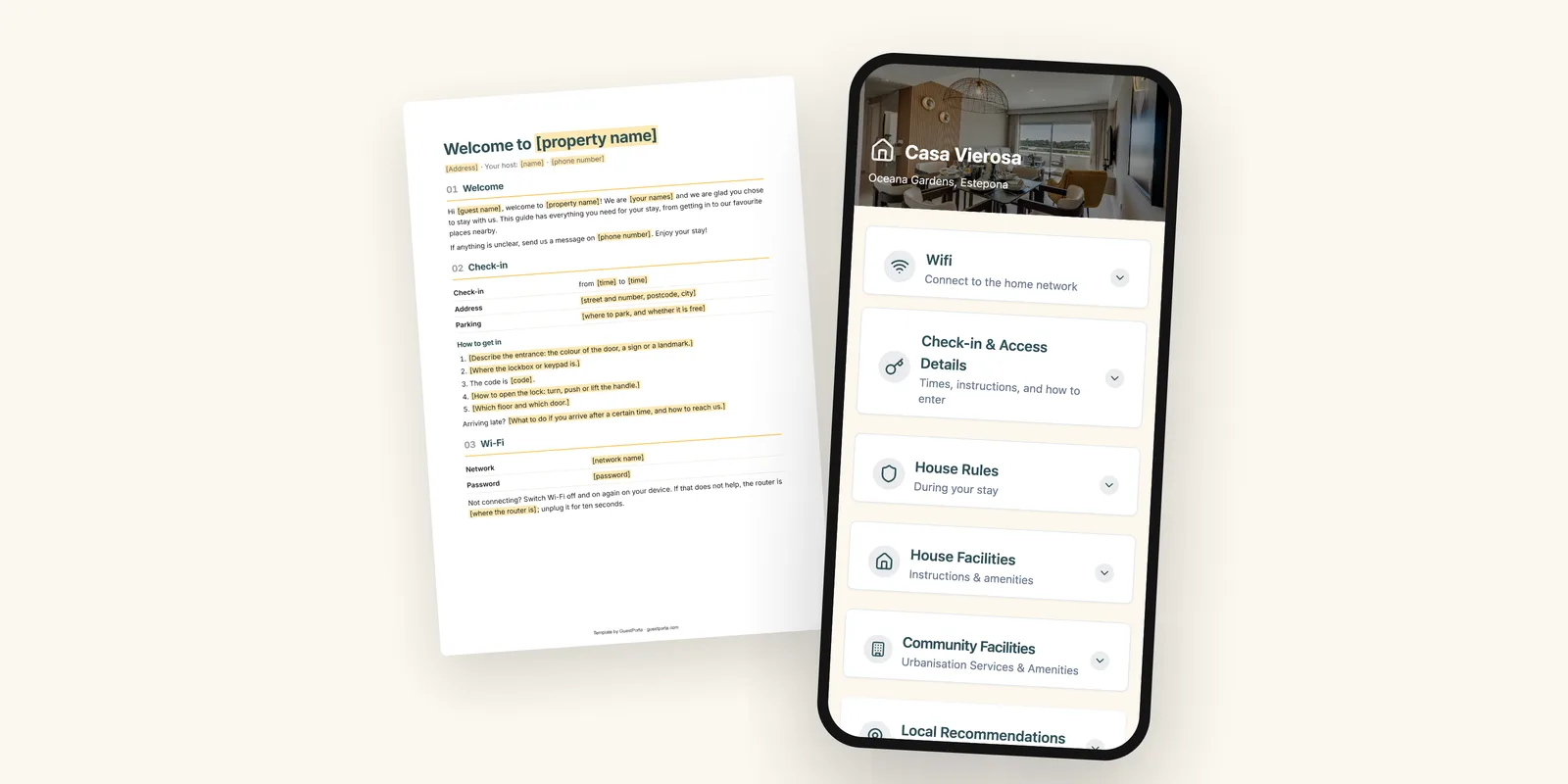
The weak point is change. When breakfast moves from eight to half past, every copy is wrong, and you are the one walking round with a pen. The comparison of printed or digital welcome books goes through the trade-offs. A sensible mix is a page for the facts that change and a card for the welcome.
Where a guest page fits
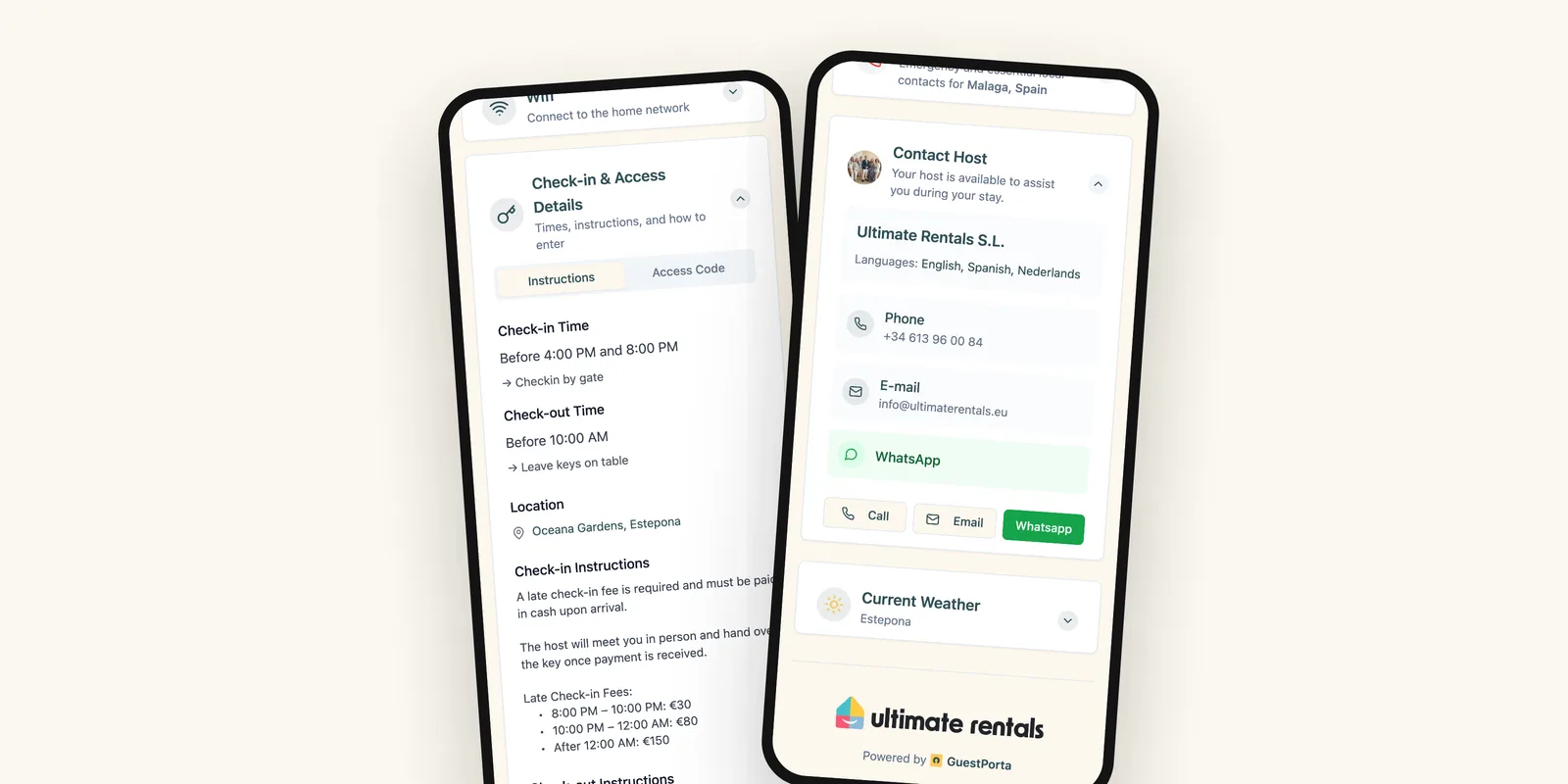
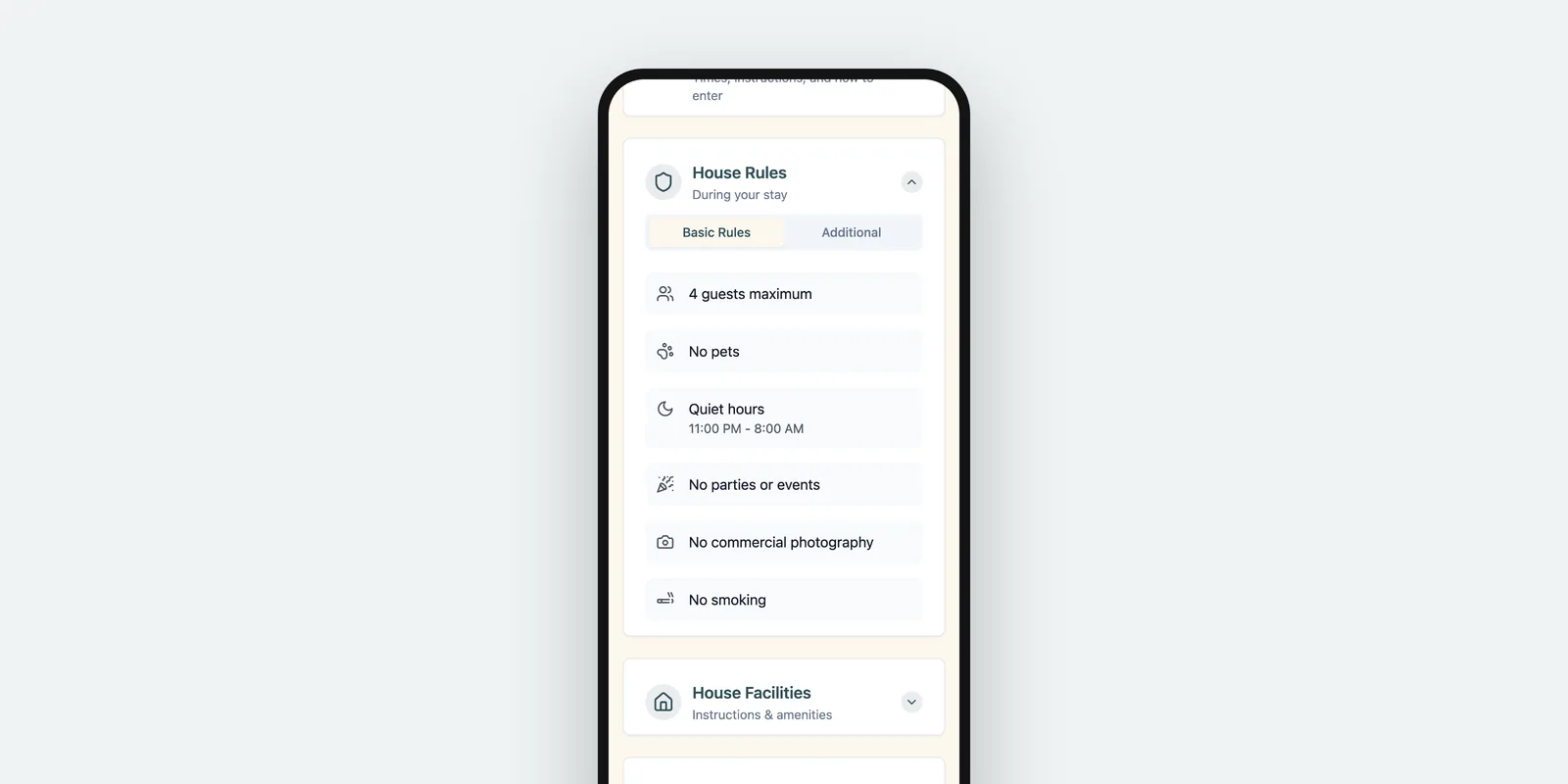
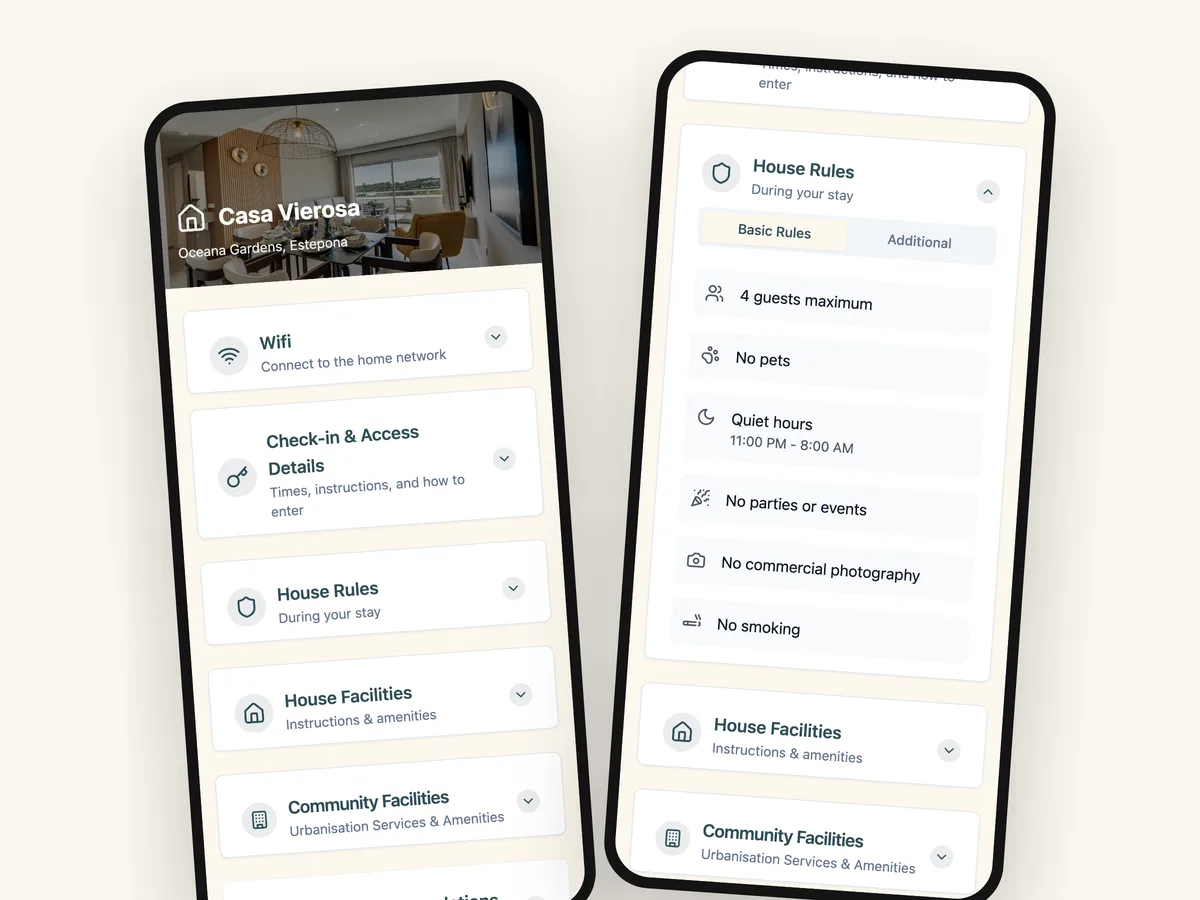
A guest page is one link per property, opened on the guest’s own phone, with no app to install and no account to create. For a B&B, you put the breakfast times, the shared-space notes, the house rules and your local tips on it, and send the link with the booking confirmation. When the times change in spring, you edit the page once and everyone sees the current version, including guests who booked months ago.
It does not do the welcome for you, and it should not. Our page for bed and breakfast owners shows how the sections fit together, and you can share your house rules on the same page as the check-in steps. Start with breakfast. If you write only one section well, make it that one.
FAQ
Do I still need a guest folder if I am always at the property?
Yes, because you are not always in the room when a guest has a question. Someone arrives while you are shopping, or wonders about the Wi-Fi at ten at night. A written page answers those moments and leaves your time with guests for the conversations you want to have.
Should the breakfast menu be in the folder?
Put the times, the place and how to ask for dietary needs in the folder. The daily menu can stay a spoken thing or a card on the table if it changes. A fixed part that guests can check at any hour is more useful than a long menu that is out of date by Thursday.
Is a paper folder still fine for a B&B?
For a small house with a few rooms, a printed sheet in each room works well, and it feels warm. The weak point is changes, because a new breakfast time means reprinting every copy. A page you open with a link avoids that, and you can still leave a printed card on the bedside table.
The GuestPorta team builds digital guest pages for hosts and property managers, and writes about guest communication for short-term rentals.