- Write check-out as a short list in the order guests walk through the house, not as a paragraph of requests.
- Ask only for what saves you real time, and say why, or guests will skip it.
- Put the late check-out rule and its price in writing before the stay, so it is not an argument at the door.
It is 10:40 on the last morning. The check-out time was 10:00. The guests are still packing, the bins are full, a window is open upstairs, and your cleaner is standing at the door with the next guest’s arrival time in her head.
Nobody planned this. The guests simply never knew what you needed from them, because the only thing you told them was a time.
Arrival gets most of the attention, because that is where guests panic. Departure is quieter, but it decides how your turnaround goes. This is how to write it so it gets followed.
Start with the time, and say it twice
Put the check-out time at the top, and put it in the message the day before as well. It is the one fact everything else hangs on.
Be specific about what the time means. “Check-out by 10:00” can mean out of the bed by ten, or out of the door by ten. Write the second one: “Please be out of the house by 10:00, with the key returned.” Guests who are driving to an airport will plan around the sentence they read.
Keep the list short and in walking order
A paragraph of requests gets skimmed. A list in the order a guest walks through the house gets done. Start upstairs and finish at the front door:
- Windows closed, and the air conditioning or heating switched off.
- Towels in the bath or in the basket, wherever you want them.
- Dishes in the dishwasher, and the dishwasher started if that is your rule.
- Rubbish in the bins outside, with a line on which bin and where it stands.
- Anything perishable in the fridge taken with them or thrown away.
- Key or fob back in the lockbox or on the hook, and the door pulled shut.
Six lines is plenty. Each one is a thing a guest can tick off in their head as they pass it.
Ask only for what saves you time
Every extra request costs you a little goodwill, so spend it where it counts. Ask yourself of each task: would I redo this myself if the guest did it badly?
If the answer is yes, take it off the list. Stripping beds is the classic one: check with the person who actually cleans. Then add a reason to the ones that remain, in half a sentence:
- “Please start the dishwasher, the cleaner arrives at eleven and cannot wait for it.”
- “Close all the windows, the shutters are electric and break if they jam.”
- “Leave the bins by the gate, collection is at seven on Tuesdays.”
A request with a reason feels like information. A request without one feels like a chore.
The ones that vary by property
Some items only exist in certain places, and these are the ones guests get wrong most often:
- Keys. Say exactly where they go. “Return the key” has produced many keys in many suitcases. If you use a lockbox, say whether the guest should scramble the code afterwards.
- Bins. In a city flat the rubbish may go down in a lift to a shared room, with separate containers for glass and paper. In a villa it may be a walk to the road. Say which, with a distance.
- Heating and air conditioning. Switch off, or leave on eco? Guests cannot guess.
- Pool and terrace. Cover on, cushions inside, parasol closed, if any of that applies. There is more on that in our guide to pool house rules.
- Shared building. Quiet when leaving early, and no luggage dragged down the stairs at six.
Decide the late check-out rule before anyone asks
A late check-out request usually arrives at 9:30 on the morning itself. If you have not decided what you think, you will decide badly, in a hurry, over a message.
Decide once, in daylight, and write it down. There are only three honest options:
- No exceptions. Fine when you have a same-day arrival. Say so and say why.
- Free if the house is empty that day. Often the best choice. It costs you nothing and guests remember it.
- Paid, with the price stated. An extra two hours often costs you a cleaner who cannot start, so a fee is fair. Name the amount or the rule, and name the latest possible time.
Whatever you choose, put it next to the check-out time rather than in a separate document. A guest who reads the rule while booking a flight plans around it. A guest who first hears it at the door experiences it as a penalty.
Do not promise a late check-out in a chat message and then forget it. If you agree one, tell your cleaner the same minute.
What paper does better
A printed card on the back of the front door has one real advantage: it is there at the exact moment of leaving, with no phone needed. If you can stick one up, a short card with the time, the key and the bins is worth having alongside whatever you send digitally.
The weakness of a card is that it goes out of date the first time something changes, and that it cannot be read before the last morning. Guests who want to book a taxi or plan a drive need the time the evening before, in a place they can open on their phone.
Send it where they will read it
Guests read check-out instructions at two moments: when they plan the last day, and when they pack. Cover both:
- The full list on the guest page, available for the whole stay.
- A short message the evening before, with the time and a link to the full list.
The message should not repeat the list. It should carry the time, the one thing most likely to be forgotten, and the link. If you already send a message the day before, our guide to guest messages to automate has the wording for it.
Keep it with the rest of the stay
A check-out list is the last item in the same story as the check-in steps, and it helps when it lives in the same place. Guests who found the gate code on one page will look for the departure instructions on that page too, instead of scrolling back through a message thread.
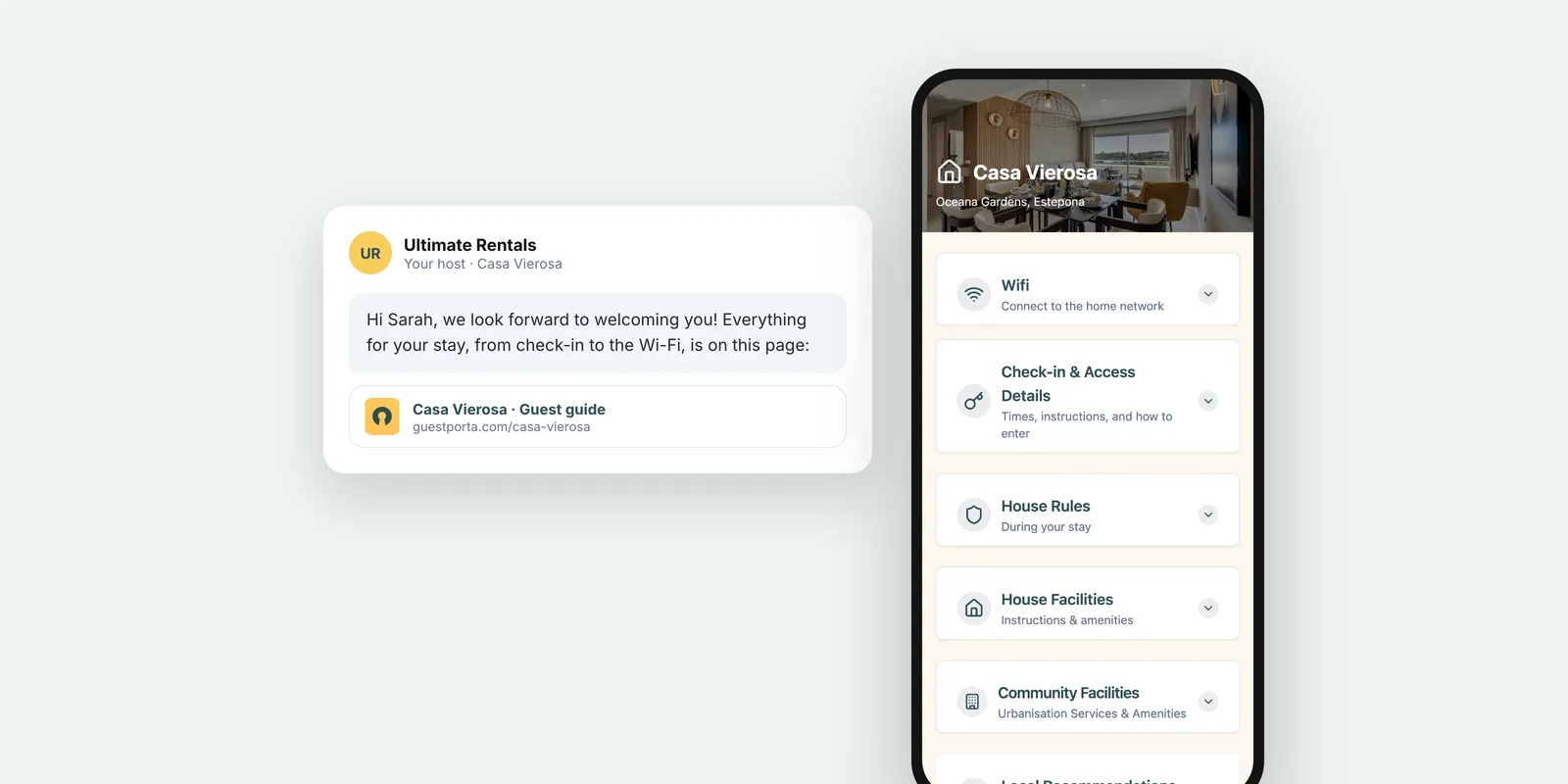
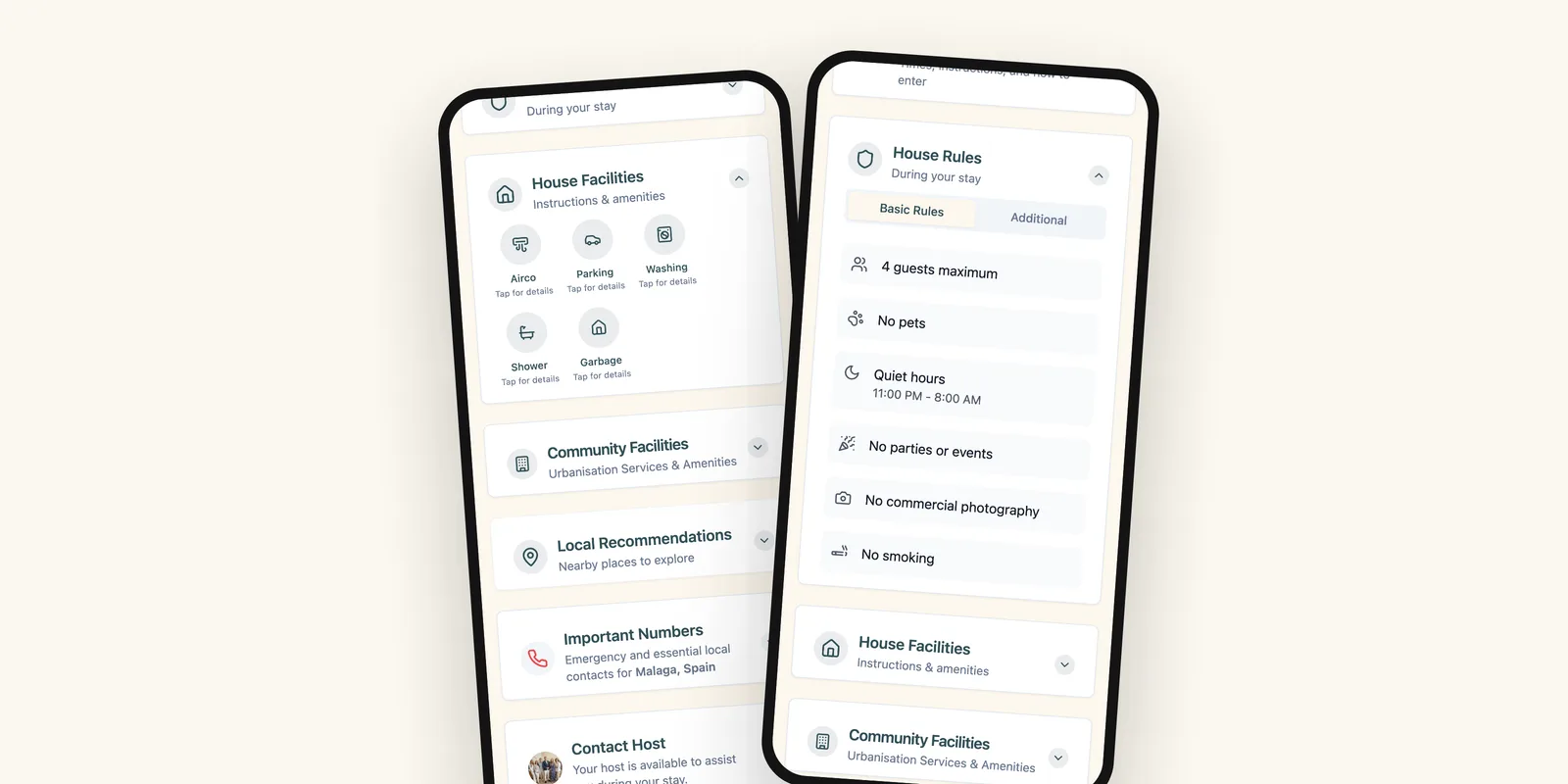
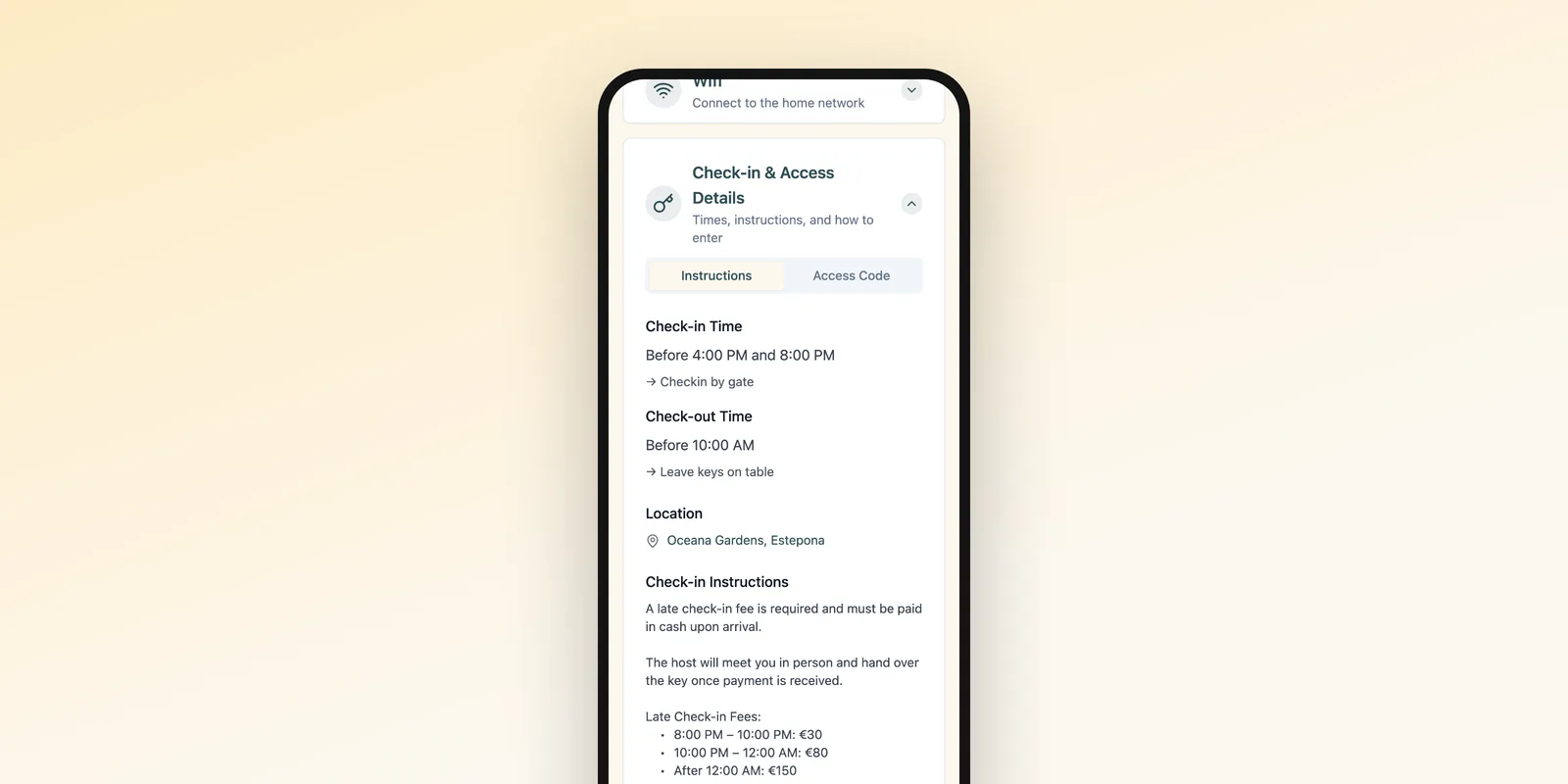
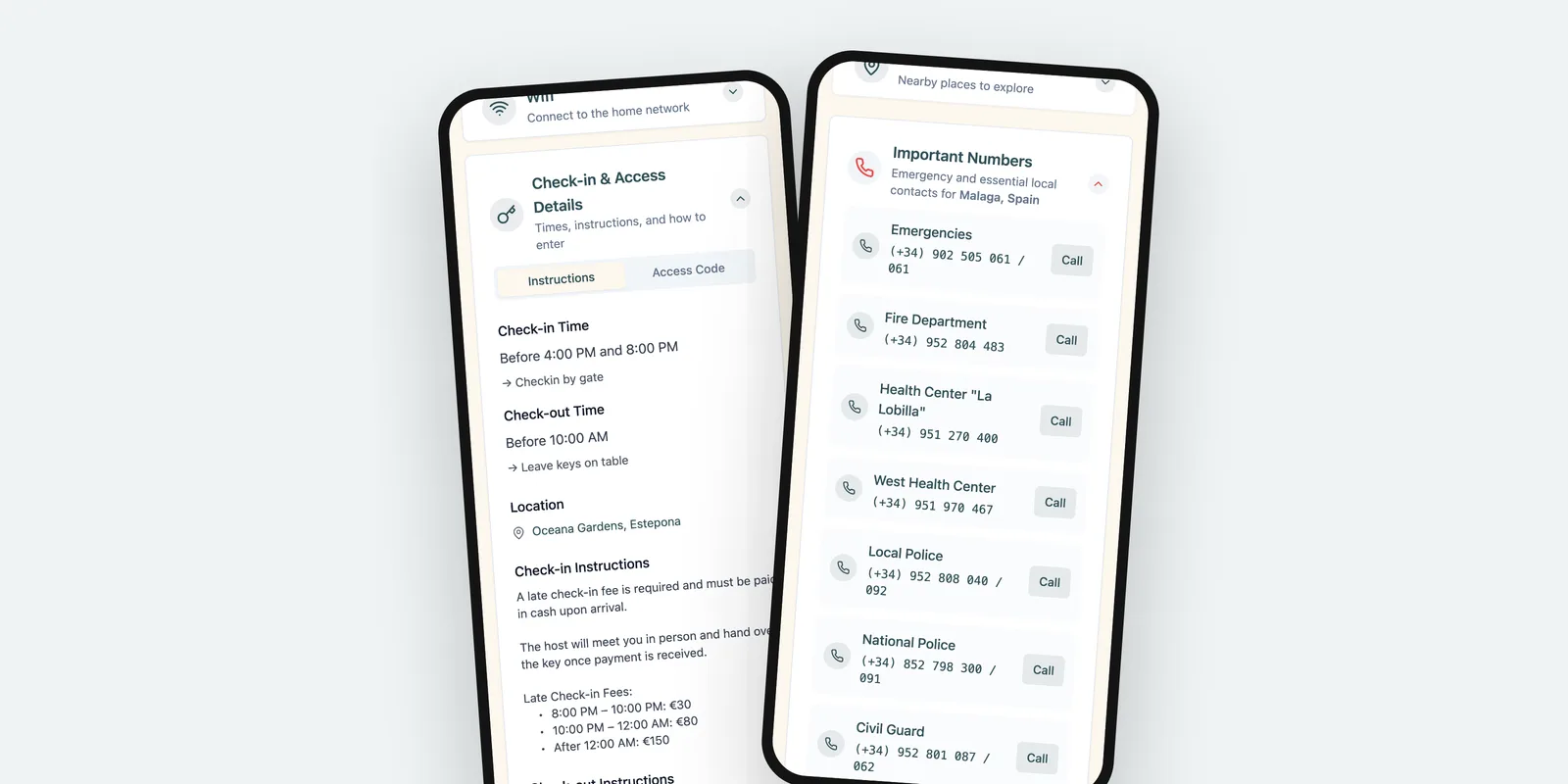
On a GuestPorta page, the check-in and check-out times and the step-by-step instructions sit together, as described on the check-in instructions page. If you rent out a villa or a holiday house, where the last morning has more to it than a flat does, the holiday homes page shows how the rest of the guest information fits around it.
When a bin day or a key location changes, you edit the page once and every upcoming guest sees the current version. Whichever tool you use, the habit is the same: write the last morning down, in walking order, with a reason for each line.
FAQ
How many check-out tasks can I ask guests to do?
Aim for five or six, and keep only the ones that change your turnaround. Guests will strip beds and wash floors if you ask, but they will do it badly and resent it. Anything you would redo yourself should not be on the list.
Should I charge for a late check-out?
If a late check-out stops you cleaning before the next guest, yes, and say so in advance with the amount or the rule. If nobody arrives that day, you can say yes for free and keep the goodwill. Whichever you choose, write it down so every guest gets the same answer.
When should guests see the check-out instructions?
Twice. Once on the page they already have for the stay, so they can plan the last morning, and once in a short message the evening before. The evening before is when they pack and when they actually read it.
The GuestPorta team builds digital guest pages for hosts and property managers, and writes about guest communication for short-term rentals.